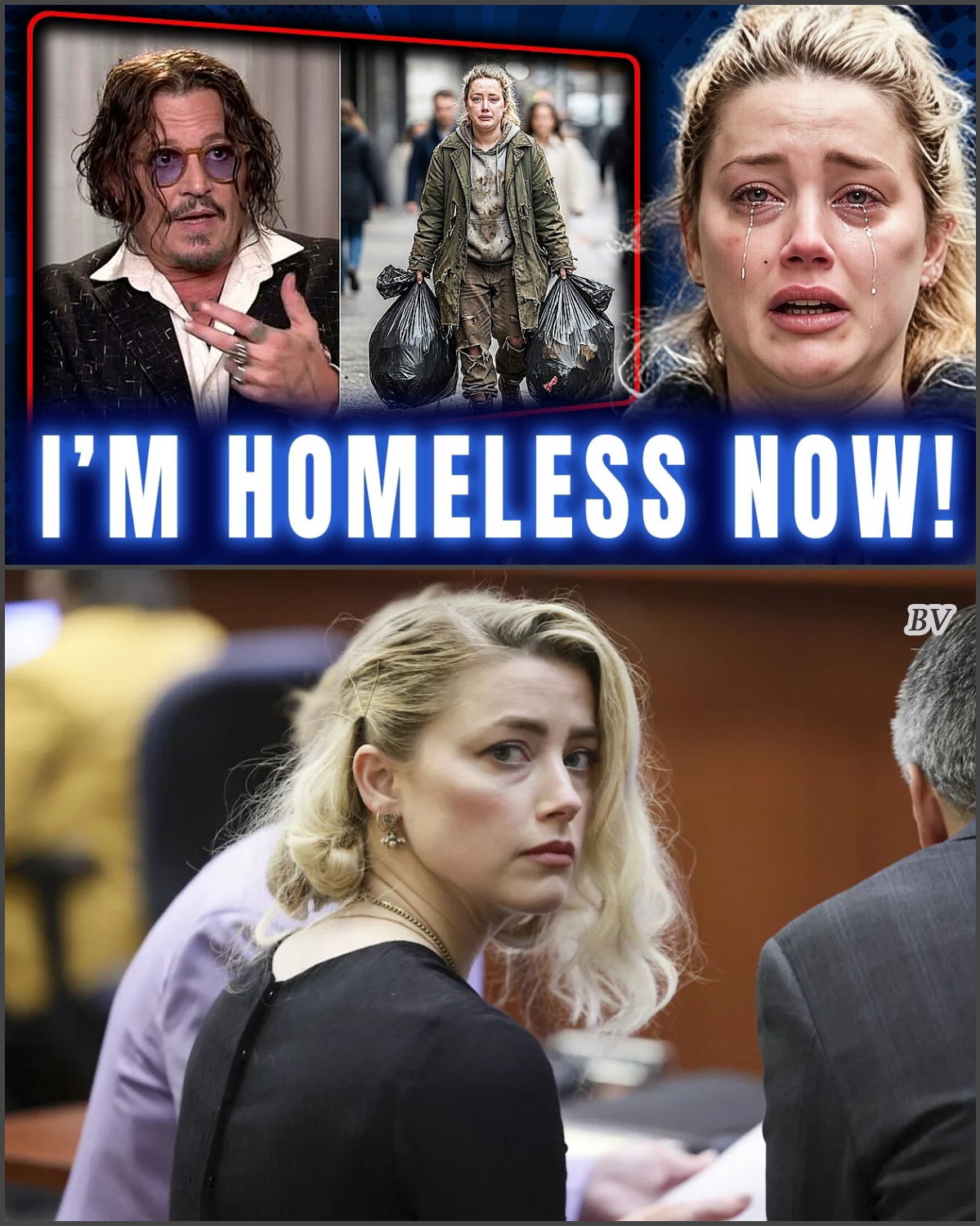
The Hidden Pain Behind Amber Heard’s Silence – What She’s Telling Friends vs What She Shows The World
In a raw and revealing moment captured for a new documentary, Amber Heard told the camera that she has “lost the ability to speak” and no longer wants to use her voice.
The statement, made nearly four years after her high-profile defamation trial against Johnny Depp, should have marked a quiet chapter of acceptance.
Instead, it has only highlighted a growing disconnect between the calm, composed image Heard presents to the public and the private despair insiders say she is actually experiencing.

Heard’s words in the documentary Silenced, which premiered at Sundance in January 2026, were delivered with visible emotion.
She spoke of regret, of hating who she became in that relationship, and of wanting to step away from the spotlight entirely.
On the surface, it appeared to be a woman choosing peace after years of public scrutiny.
But according to multiple sources close to her, the reality behind closed doors in Madrid is far more complicated and painful.
After the Virginia jury awarded Depp more than $10 million in damages, Heard’s life changed dramatically.
She sold her California home, left Hollywood, and relocated first to Majorca and then to Madrid.
She now rents a flat under the alias Martha Jane Canary — the birth name of the legendary frontierswoman Calamity Jane.
Neighbors describe seeing her walking her young daughter to school each morning wearing a cap and sunglasses, trying to blend into everyday life.
Most people around her reportedly don’t even recognize the once-famous actress. Yet while she tells the public she has found peace in Spain, friends say she has been complaining bitterly and struggling with deep emotional turmoil.
The gap between her public statements and private reality has become impossible for many observers to ignore.
She claims she does not want to use her voice anymore, yet the very documentary in which she makes that statement requires her to speak.
If a major distributor picks up the film, she may be forced back into interviews and promotion — exactly the kind of spotlight she says she wants to escape.
The contrast with Depp’s post-trial life could not be starker. While Heard lives modestly in a foreign country with a reportedly diminished net worth, Depp has rebuilt his career with remarkable success.
He renewed his Dior Sauvage campaign for a reported $20 million, directed a film starring Al Pacino, and booked a major role opposite Penelope Cruz.
His net worth is estimated at $150 million, and he owns a sprawling 850-acre estate in England.
In interviews, he has described himself as a “crash test dummy for Me Too,” framing himself as the true victim of a cultural moment that nearly destroyed him.
This disparity has fueled intense public debate. While Depp continues to work and earn at the highest levels, Heard has struggled to secure major roles.
Her part in Aquaman and the Lost Kingdom was significantly reduced, reportedly due to studio decisions and pressure from co-star Jason Momoa.
She has given almost no English-language interviews since the trial, and her last major public appearance was in 2023 when she arrived wearing an orthopedic brace after a minor accident at home.
The documentary has only intensified the scrutiny. In it, Heard reflects on the trial, the public backlash, and the personal cost of speaking out.
She expresses regret for how she behaved in the relationship and acknowledges saying and doing things she wishes she could take back.
But the tone is not one of full accountability in the eyes of many viewers.
Instead, it feels like a careful performance of victimhood mixed with selective silence. Insiders claim the private version of Heard is much more fragile.
She reportedly tells friends she is in despair, struggling with her identity, her finances, and her place in the world after the trial.
Raising three young children — all born via surrogate with no publicly identified fathers — as a single mother in a foreign country has added another layer of difficulty.
Her estimated net worth has reportedly fallen dramatically, from around $11 million before the trial to as low as $500,000 according to some sources.
That kind of financial pressure, combined with the loss of Hollywood opportunities, has left her in a precarious position.
The legal outcome itself remains controversial. In the UK, a judge ruled that the “wife beater” label applied to Depp was substantially true, accepting 12 out of 14 alleged incidents of violence.
That ruling was never presented to the Virginia jury. Many legal observers argue this missing context fundamentally changed how the American jury perceived the case.
A juror later admitted in an interview that the fact Heard is an actress influenced how believable her testimony seemed to him, saying actors can “put on a different face if you pay them enough.”
This disconnect between the two court outcomes continues to fuel debate. One court found substantial evidence of abuse.
Another court ruled that Heard defamed Depp. Both findings are legally valid, yet they sit in direct contradiction.
The Virginia jury never heard the full UK judgment, which has led many to question whether the American trial told the complete story.
Heard’s decision to participate in the documentary has created its own complications. By claiming she no longer wants to use her voice while simultaneously using that voice to promote a film about being silenced, she risks undermining her own message.
If the documentary gains wide distribution, she may be pulled back into the very spotlight she claims to have left behind.
If it fails to find a major platform, it could reinforce the narrative that she has indeed been silenced — not just by the verdict, but by the industry itself.
The human cost on both sides is undeniable. Depp has spoken of betrayal by longtime friends and colleagues who testified against him.
He has rebuilt his career but still carries the scars of the very public humiliation he endured.
Heard, meanwhile, has lost her place in Hollywood, her financial security, and much of her public support.
She is raising three small children alone in a foreign country while trying to maintain some semblance of normalcy.
What makes this story particularly compelling is the unresolved tension. The legal case is over, but the emotional and narrative war continues.
Heard presents herself as a woman who has chosen silence and peace. Insiders say she is privately tormented.
Depp presents himself as a survivor who was nearly destroyed by false accusations. Both versions cannot be entirely true at the same time.
As more details emerge from those closest to Heard, and as the documentary potentially reaches a wider audience, the gap between public image and private reality may finally become impossible to maintain.
The world is still watching, still divided, and still hungry for the full truth behind one of the most polarizing celebrity battles of the decade.
The silence Heard claims to embrace may not last much longer. And when it breaks, whatever comes next could reshape how both she and Depp are remembered.