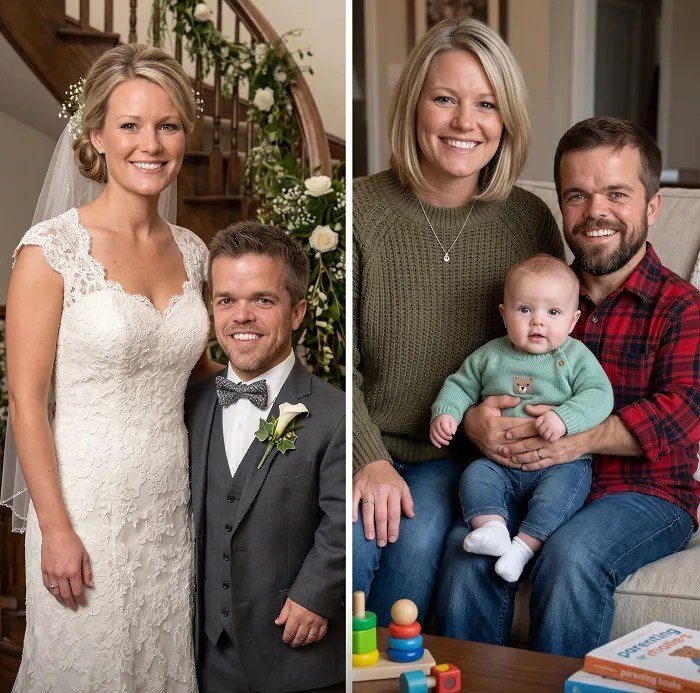
The first time my parents met Jordan, my mother smiled too brightly and said, “Oh.”
Just one word.
But I knew exactly what it meant.
Jordan squeezed my hand gently under the restaurant table as if to say, It’s okay. He had spent his whole life reading people’s reactions before they even spoke. The hesitation. The pity. The discomfort.
My father recovered first.
“Well,” he said loudly, forcing a grin, “you certainly didn’t mention he was… shorter than expected.”
Jordan gave a calm smile. “Most people don’t expect me.”
I should have known then what the next twelve years would look like.
Jordan was born with achondroplasia, a form of dwarfism. He stood just over four feet tall, but somehow people only saw the inches he lacked instead of everything he carried. Intelligence. Patience. Kindness. Quiet confidence.
My parents saw none of that.
To them, appearances were everything.
My father owned a luxury furniture company and treated reputation like religion. My mother obsessed over charity galas, country clubs, and what neighbors whispered behind closed doors.
And Jordan—an orphan raised in foster homes before growing up in a group home—didn’t fit the image they had built for their daughter.
Never mind that he had graduated top of his class in architecture school.
Never mind that he had built his own firm from nothing.
Never mind that he loved me better than anyone ever had.
To my parents, he was still something embarrassing.
Something unfortunate.

At our wedding reception, my father proved it.
He stood to give his toast, drink in hand, smiling like he was charming the room.
“Marriage is all about compromise,” he announced. “And Emily has certainly proven that.”
A few nervous laughs spread across the tables.
Then he looked directly at Jordan.
“Let’s just hope their future children can actually reach the dinner table.”
The room went silent.
I felt heat rush into my face.
My mother chuckled softly like it was harmless.
Jordan sat beside me completely still.
I wanted him to explode. To yell. To defend himself.
But instead, he slowly lifted his glass.
“To family,” he said quietly.
That was Jordan.
He absorbed humiliation the way some people absorbed rain. Silently.
But later that night, after the guests left, I found him alone outside the venue standing beneath the lights.
“You shouldn’t have had to endure that,” I whispered.
Jordan stared ahead calmly. “People reveal themselves eventually.”
“I’m so sorry.”
He turned toward me and smiled sadly.
“Don’t apologize for wounds you didn’t create.”
I cried in the car all the way home.
Over the years, things only got worse.
Every holiday dinner came with another joke.
My father asked Jordan if he needed a booster seat at restaurants.
My mother once offered him a child-sized sweater in front of relatives.
An uncle drunkenly asked whether Jordan’s feet touched the pedals while driving.
And through it all, Jordan remained polite.
Always polite.
Never angry.
Never cruel.
Which somehow made my parents worse.
Because they wanted a reaction.
They wanted proof that they were superior.
Eventually, I stopped visiting often. I called less. Made excuses during holidays.
Jordan never asked me to distance myself from them. He simply said, “Protect your peace.”
So I did.
Meanwhile, Jordan’s architecture firm quietly grew.
He specialized in accessible housing design and community-centered buildings. While other firms chased flashy skyscrapers, Jordan focused on schools, clinics, parks, and affordable homes.
People trusted him because he listened.
And success followed.
Not loudly.
Not arrogantly.
Just steadily.
That was around the same time my parents’ perfect life collapsed.
My father’s business had been struggling for years, though he hid it behind expensive suits and staged vacation photos online. Then one bad investment became another. Loans stacked up. Lawsuits followed.
Within six months, everything unraveled.
The company went bankrupt.
Their vacation house sold first.
Then the luxury cars disappeared.
Finally, even their condo faced foreclosure.
I learned all this from relatives because my parents were too proud to admit it directly.

Until Tuesday evening.
The doorbell rang during dinner.
Jordan opened the door, and there they stood.
My mother looked thinner. My father older.
And suddenly… polite.
“Emily,” my mother said softly, almost nervously. “Can we come in?”
I already knew why they were there.
Jordan stepped aside immediately.
“Of course.”
They sat in our living room while Jordan prepared tea himself because neither of them offered to help.
For nearly two hours, they talked.
About unfair business partners.
About bad luck.
About banks.
About stress.
Not once did they apologize.
Not once did they acknowledge twelve years of cruelty.
Finally my father cleared his throat.
“We heard your firm landed the Riverside contract.”
Jordan nodded once.
“It did.”
My father forced a smile.
“We just need a little help getting through this difficult period. Temporary help.”
I crossed my arms.
“How much?”
My mother answered quietly.
“Twenty thousand.”
I almost laughed.
Not because it was funny.
Because the audacity was unbelievable.
These people had spent over a decade treating my husband like he was beneath them.
Now they needed him.
I opened my mouth to tell them to leave, but Jordan touched my arm lightly.
Then he stood.
“I’ll be right back.”
He disappeared into his office.
A minute later, he returned holding a check.
Already written.
$20,000.
My mother gasped softly.
My father looked relieved for the first time all night.
My mother reached toward the check instantly.
But Jordan gently pulled it back.
“You can have this,” he said calmly, “right now. But only if you fulfill one condition.”
The room froze.
My father frowned. “Condition?”
Jordan looked directly at him.
“You will tell the truth.”
Silence.
My mother blinked. “What truth?”
“That for twelve years, you mocked me because of my body. Because of my childhood. Because you thought money and status made you better people.”
My father stiffened.
Jordan continued evenly, “You insulted me publicly and privately. You humiliated your daughter for loving me. And you called it humor.”
My mother’s cheeks reddened.
Jordan placed the check carefully on the coffee table.
“You will invite the family here Sunday afternoon. You will apologize honestly in front of everyone you mocked me to.”
My father stared at him in disbelief.
“You want to embarrass us?”
Jordan shook his head.
“No. I want accountability.”
“You’re enjoying this,” my mother whispered.
Jordan’s face remained calm.
“No,” he said quietly. “I’m ending it.”
I had never seen my father speechless before.
Finally he muttered, “And if we refuse?”
Jordan slid the check back into his pocket.
“Then I wish you luck.”
My mother grabbed my father’s arm before he could stand.
“Richard,” she whispered sharply. “We don’t have a choice.”
The shame on my father’s face was almost painful to watch.
But not nearly as painful as twelve years of insults.

Sunday arrived cold and gray.
Relatives filled my parents’ condo living room, confused about the sudden gathering.
My aunt whispered to me, “What’s going on?”
“You’ll see,” I answered.
My father stood first.
I noticed his hands trembling.
“For years,” he began slowly, “I treated Jordan cruelly.”
The room immediately fell silent.
My father swallowed hard.
“I mocked his height. I made jokes at his expense. I judged him for growing up without parents. And I hurt my daughter in the process.”
Nobody moved.
My mother started crying before she even spoke.
“I cared too much about appearances,” she admitted shakily. “I thought Jordan reflected badly on our family. But the truth is… our behavior did.”
Then she turned toward Jordan directly.
“You showed us more grace than we deserved.”
My chest tightened painfully.
Because for the first time in twelve years, they were finally seeing him clearly.
Not as a condition.
Not as a joke.
As a man.
After the relatives left, my father stood awkwardly near the doorway.
Jordan pulled the check from his jacket and handed it over.
My father stared at it silently.
“You’re still helping us?” he asked quietly.
Jordan nodded.
“Why?” my mother whispered.
Jordan looked at them both.
“Because kindness shouldn’t depend on whether someone deserves it.”
My mother broke down crying completely then.
Not elegant tears.
Not dramatic tears.
Real ones.
And for the first time since I was a little girl, I saw shame crack open my parents’ pride.
Months passed after that.
Slowly, things changed.
Not perfectly.
Not instantly.
But genuinely.
My father stopped making cruel jokes altogether.
My mother began volunteering at a children’s shelter after learning more about Jordan’s childhood.
And every Sunday, they came to dinner.
One evening, I found my father watching Jordan repair our niece’s broken dollhouse on the floor.
Jordan carefully glued tiny wooden pieces together while my niece sat beside him smiling.
My father stood there quietly for a long moment.
Then he said softly, “You know… I spent twelve years calling you half a man.”
Jordan looked up.
My father’s voice cracked.
“But I’ve never met a stronger one.”
Jordan didn’t answer immediately.
Then he smiled gently.
“People only see what they’re prepared to understand.”
And somehow, after all those years, my parents finally were.
Note: This story is a work of fiction inspired by real events. Names, characters, and details have been altered. Any resemblance is coincidental. The author and publisher disclaim accuracy, liability, and responsibility for interpretations or reliance. All images are for illustration purposes only.