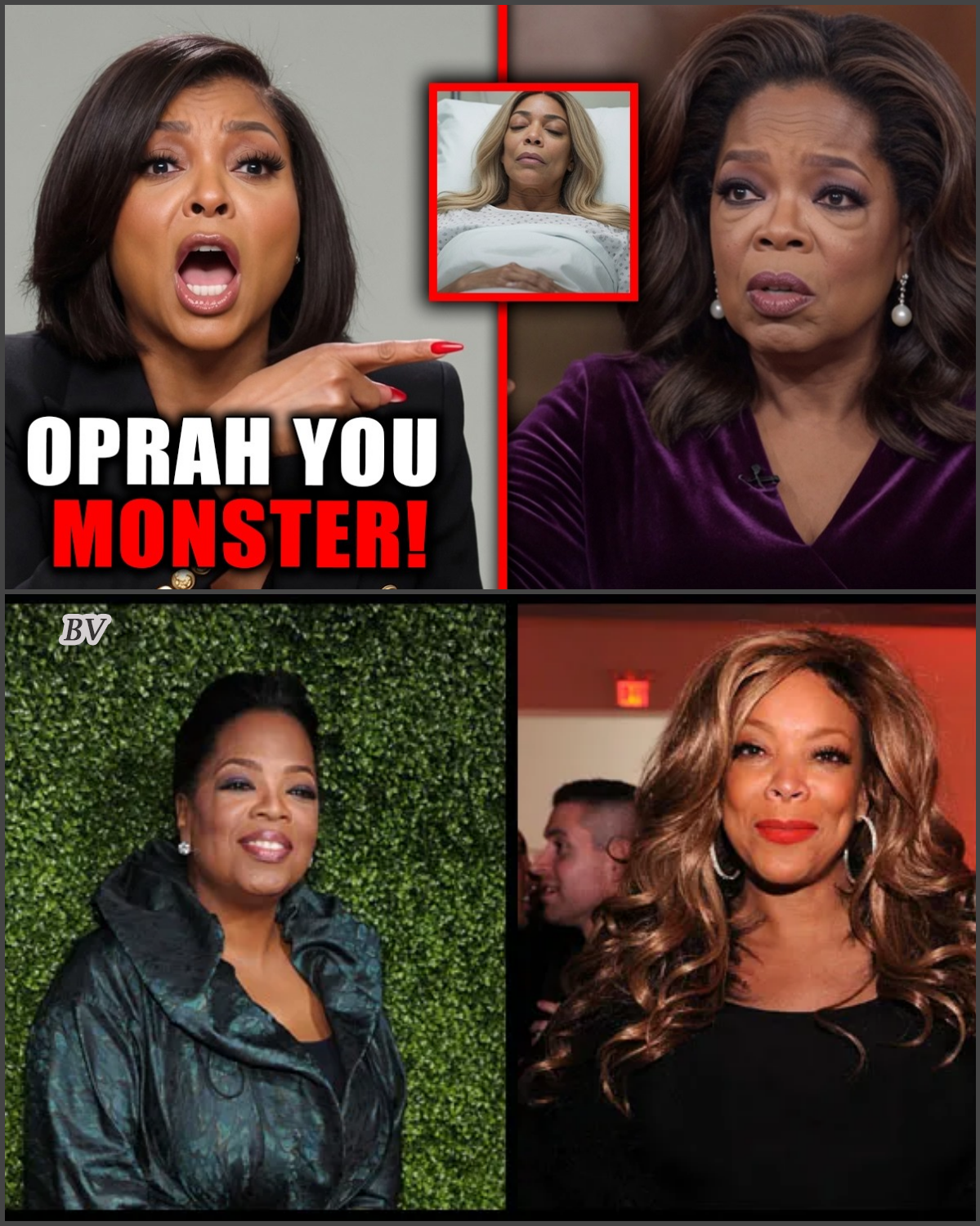
“Fashion Week Glam to Locked Memory Unit — Wendy Williams’ Shocking Claims About Oprah Have Hollywood Running Scared”
At New York Fashion Week, Wendy Williams turned heads for all the right reasons. Dressed in a cropped fur jacket and fishnets, long lashes perfectly applied, she waved to screaming fans, chatted with Lil’ Kim, and sat front row at LaQuan Smith’s runway show looking every bit the star she has always been.
For a brief moment, the Wendy Williams the world fell in love with was back — sharp, glamorous, and completely in control.
Hours later, she returned to a very different reality. The 61-year-old media icon lives on a locked memory care floor at The Coterie, a luxury assisted living facility in Hudson Yards that costs $25,800 per month.

Her apartment door cannot be locked from the inside. She has no stove, no refrigerator, and no cell phone.
She can only make outgoing calls from a landline. Every visitor, every outing, and every decision requires approval from a court-appointed guardian she never chose.
This is not a health crisis, according to those closest to her. This is a system that has quietly erased one of television’s most outspoken voices.
Wendy Williams has been under full guardianship since 2022 after Wells Fargo filed a petition claiming she was unable to manage her own finances.
What began as a financial protection case has spiraled into total control over every aspect of her life.
Her court-appointed guardian, Sabrina Morrissey, earns between $250 and $450 per hour. Her lawyer receives a $10,000 monthly retainer.
The longer Wendy remains confined, the more certain people profit. The contrast is jarring. In public, Wendy appears coherent, stylish, and fully aware.
She called into The Breakfast Club in January and delivered a fiery, articulate rant about her situation.
She has passed a psychological evaluation. Her own family says she sounds clearer than she has in years.
Yet the court continues to treat her as someone who cannot be trusted with basic freedoms.
In a desperate cry for help that captured national attention, Wendy stood at her fifth-floor window and dropped a handwritten note to the street below.
It simply read: “Help. Wendy.” Photographers captured the moment. The public saw it. And still, nothing changed.
The restrictions placed on her are extreme. No incoming phone calls. No independent access to news unless she fights for an iPad.
Limited visitors. Even simple things like attending church or going to dinner require permission. This is a woman who once commanded a national television audience, built a multimillion-dollar empire, and fearlessly spoke her mind on air for years.
Now she must ask permission to live. At the center of Wendy’s growing frustration are serious allegations about who benefits from her continued confinement.
She and those close to her have pointed fingers at powerful figures in Hollywood, with Oprah Winfrey’s name repeatedly surfacing in rumors and private conversations.
The pattern is disturbing. Multiple Black entertainers — Mo’Nique, Taraji P. Henson, and others — have publicly shared stories of feeling undermined or blacklisted after crossing paths with Oprah.
Mo’Nique has accused Oprah of bringing her alleged abuser onto her show without warning. Taraji spoke out about feeling undervalued on The Color Purple, a project Oprah produced.
Wendy herself reportedly received a private letter from Oprah years ago telling her to stop discussing certain topics on air.
When Sherri Shepherd launched a new talk show in Wendy’s former time slot, Oprah appeared as a special guest and gave her what many saw as a public “passing of the baton.”
The timing was unmistakable. As Wendy was being placed under guardianship and silenced, Oprah was helping install her successor.
Now, with rumors swirling that Sherri’s show may not be renewed, whispers suggest networks are considering bringing Wendy back.
The potential irony is brutal: the woman some believe was deliberately removed from daytime television could be invited back to reclaim her throne.
Wendy’s family situation has only complicated her fight for freedom. Her son Kevin Hunter Jr.
And sister Wanda have both attempted to become her guardian, but the court has repeatedly denied them.
Internal family disagreements have prevented a united front, leaving the current guardian firmly in control.
Even Wendy’s ex-husband has filed a federal lawsuit calling the guardianship “fraudulent bondage” and seeking massive damages.
The upcoming weeks are critical. A new medical report is expected soon, and a judge must decide by November 3 whether to maintain the current guardianship arrangement.
For Wendy’s supporters, this represents the best chance in years to finally set her free.
The bigger question haunting this entire saga is simple yet chilling: If Wendy Williams is well enough to command attention at Fashion Week, coherent enough to hold powerful radio interviews, and sharp enough to pass psychological evaluations, why is she still living like a prisoner in a gilded cage?
Some insiders claim the answer goes far beyond health concerns. They point to the massive financial incentive for those managing her estate.
Others suggest her long history of spilling celebrity secrets made her a liability in an industry that values silence.
Whatever the truth, the optics are devastating. A woman who gave millions of viewers laughter, honesty, and unfiltered commentary for years now finds herself isolated, controlled, and begging for help through notes thrown from windows.
The same industry that celebrated her rise has watched her fall with disturbing indifference. Wendy Williams built her career on telling the truth — sometimes uncomfortably so.
Now the truth about her own situation is being told in fragments: a glamorous public appearance here, a desperate note from a window there, a frustrated radio call when she manages to get through.
As the November court deadline approaches, the world is watching. Will the system finally listen to Wendy’s own voice, or will the machinery that profits from her confinement continue to win?
One thing is certain: the woman who once dominated daytime television has not disappeared quietly.
Even from inside a locked memory unit, Wendy Williams is still fighting — and her message is getting louder with every public appearance and every cry for help.
The Hollywood machine may have tried to silence her, but Wendy is making sure the world still hears her voice.