
He was brilliant — undeniably so. But no one ever described him as warm.
Among classmates, he carried a nickname that said everything: a “walking brain.”
He played trombone in the school band. He skipped grades. He entered Harvard at just 16. To neighbors, his parents were the kind who “sacrificed everything they had for their children.”
By every outward measure, he had been handed rare gifts — and every opportunity to build an extraordinary life.
What he chose to do instead would horrify the world.
In 1942, a little boy was born in Chicago, into a working-class Polish-American family. His father made sausages for a living. His mother devoted herself entirely to her children, determined to give them every opportunity she never had
His parents were ordinary, working-class people. They were raised as Roman Catholics but eventually became atheists. In Evergreen Park, where their son grew up, neighbors remembered them as “civic-minded folks.” One neighbor said they “sacrificed everything they had for their children.”
He had a younger brother, David, someone who would one day play a crucial role in bringing his story to a close.
As a child, nothing seemed unusual. At Sherman Elementary, he was described as healthy, normal, well-adjusted.
The test that ‘changed’ everything
Then came the test.
In high school, his IQ was measured at 167 and he was advanced past the sixth grade. Years later, he would describe that decision as a turning point. Before skipping ahead, he had friends and was even seen as a leader among his peers.
But once placed with older students, everything changed, he no longer fit in, and became a target for bullying.
He played trombone in the marching band and was active in several clubs, including math, biology, coin collecting, and German.
But despite being involved, he never truly fit in.
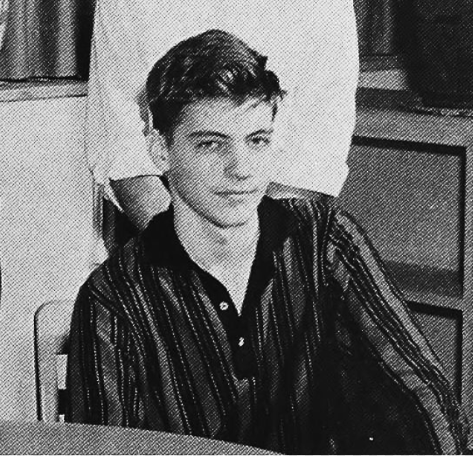
As one former classmate later put it: “He was never really seen as a person, as an individual personality … He was always regarded as a walking brain, so to speak.”
The bullying didn’t let up. Over time, he pulled further into himself. The label stuck— “walking brain.”
He skipped yet another grade, graduated high school at just 15, and went on to earn a scholarship to Harvard.
But brilliance didn’t equal readiness. A classmate later said he was “emotionally unprepared.”
“They packed him up and sent him to Harvard before he was ready,” the classmate said. “He didn’t even have a driver’s license.”
Graduated at Harvard
At Harvard, the 16-year-old boy lived quietly among other prodigies, but even there, he stood apart. He was brilliant. Focused. But distant.
He graduated in 1962 with a degree in mathematics.
But his time at the prestigious institution wasn’t just about academics.
In his second year, he became part of a psychological study led by Henry Murray, one that pushed participants to their limits. They were subjected to intense verbal attacks, meant to tear down their beliefs and destabilize them.
Murray himself described the sessions as “vehement, sweeping, and personally abusive.”
The young boy, sent off to Harvard before he was truly ready, spent 200 hours inside that experiment. Years later, his lawyers would point to it as a possible source of his growing hostility toward authority and control.
A future that vanished
After Harvard, he went on to the University of Michigan, earning both a master’s and a PhD in mathematics. His work was exceptional.
His dissertation won the university’s top award. His advisor called it “the best I have ever directed.”
Another professor put it simply: “It is not enough to say he was smart.”
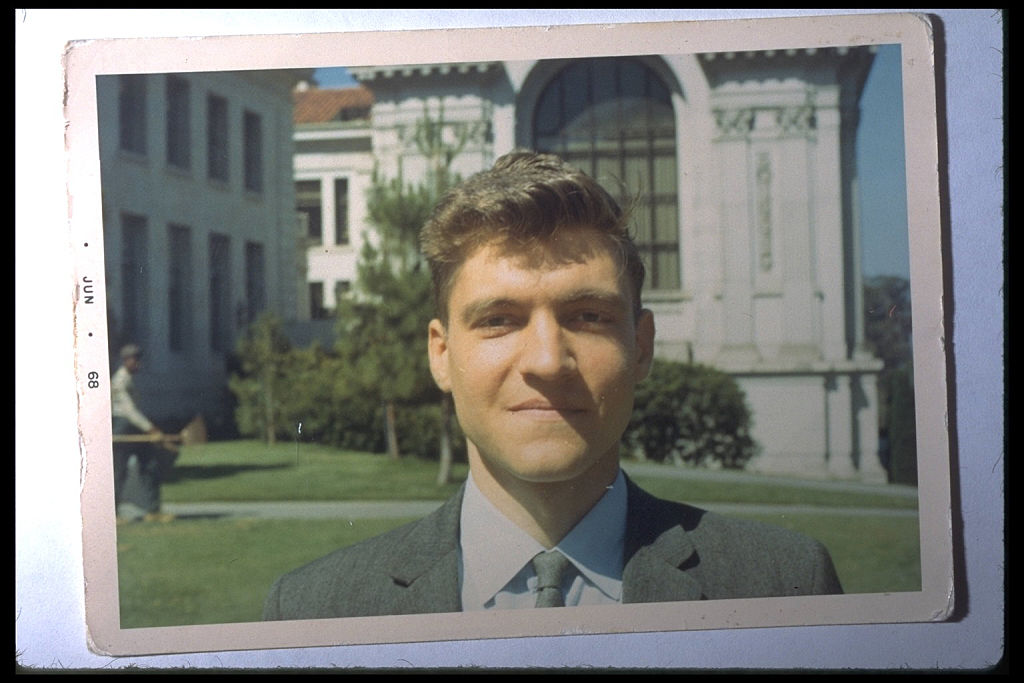
At just 25, he became the youngest assistant professor in UC Berkeley’s history.
Everything pointed to a brilliant academic future.
Then, he walked away.
On June 30, 1969, he abruptly resigned. No warning. No explanation. Colleagues were stunned. One later described the move as “quite out of the blue,” adding that he seemed “almost pathologically shy.”
At this moment, he had no close friends. No real connections. And suddenly, no career.
The cabin
After leaving Berkeley, he returned briefly to Illinois.
Then, in 1971, he disappeared. Deep in the wilderness near Lincoln, Montana, he built a small cabin with his own hands. No electricity. No running water. Just a bed, a stove, a couple of chairs, and books.
His goal was self-sufficiency. He biked into town when needed. Read constantly. Grew his own food. For a while, it looked like a man stepping away from society.
But something was shifting.
In 1983, he returned to a remote area he loved, only to find it cut through by a road.
That moment, he later said, changed everything.
“It was from that point on I decided that, rather than trying to acquire further wilderness skills, I would work on getting back at the system.”
But the turn had already begun.
Since 1975, he had been carrying out small acts of sabotage, arson, traps set near developments.
He had also immersed himself in philosophy, especially the work of Jacques Ellul. One book, The Technological Society, became, in his brother’s words, his “Bible.”
What followed wasn’t sudden. It was methodical.
Seventeen years of terror
Between 1978 and 1995, he carried out a terror campaign that would stretch across nearly two decades.
Sixteen bombs, carefully constructed, increasingly deadly, were sent or delivered across the United States.
His targets were chosen deliberately. He researched them in libraries, selecting people he believed were advancing technology, and, in his mind, destroying the natural world.
Universities. Airlines. Computer stores. Executives.
The consequences were devastating.
Three people were killed. Twenty-three others were injured, many permanently.
In 1978, his first bomb injured a university police officer in Chicago. Another wounded a graduate student at Northwestern. In 1979, a bomb aboard American Airlines Flight 444 forced an emergency landing after filling the cabin with smoke. Investigators later said it could have destroyed the aircraft.
The injuries grew more severe.
Victims lost fingers. Eyes. Hearing.
Some never recovered.
Three never survived at all.
The hunt
The FBI launched one of the largest investigations in its history. Millions of dollars. Years of effort. Hundreds of agents. Still, nothing.
The bombs were built from common materials. Fingerprints didn’t match. Clues were planted to mislead. For nearly 20 years, he remained invisible.
Until he decided to speak.
The manifesto
In 1995, he sent a demand: publish his 35,000-word manifesto, and he would stop.
The essay, Industrial Society and Its Future, was a sweeping attack on modern technology and its impact on humanity.
Authorities debated the risk. In the end, they published it.
It worked, but not in the way anyone expected.
After reading the manifesto, his younger brother David felt something unsettling.
The language, the phrasing and the ideas sounded familiar.
He searched through old letters, and found the same voice.
After agonizing over what it meant, he contacted the FBI. Experts compared the writings and agreed: they were almost certainly from the same person.
It was enough for them to take action.
The end of the search
On April 3, 1996, agents arrived at a remote cabin in Montana.
Inside, they found everything. Bomb materials. A live device ready to be sent. And over 40,000 pages of handwritten journals detailing his crimes.
He even labeled them as experiments.
“Experiment 97.” “Experiment 244.”
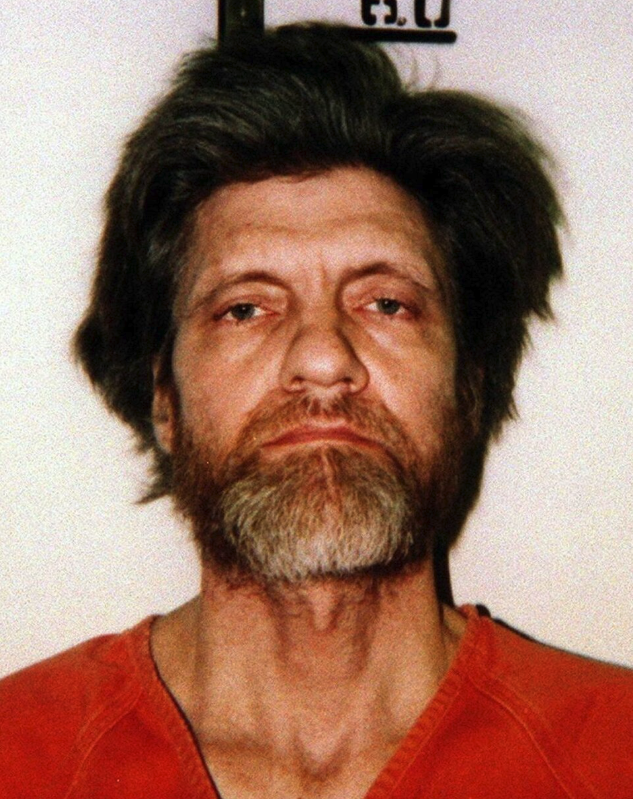
He recorded what worked. What failed. How to make them deadlier.
He showed frustration when victims survived, and satisfaction when they didn’t.
One entry made his motive unmistakably clear: “My motive for doing what I am going to do is simply personal revenge.”
The final chapter
In 1998, he pleaded guilty and was sentenced to life in prison without parole.
Years later, illness caught up with him. Diagnosed with cancer, he eventually refused treatment. Reports described him as “depressed.” On June 10, 2023, he was found unresponsive in his cell.
He was 81.
A gifted child.
The Harvard prodigy.
The brilliant professor.
The man in the cabin.
All the same person.
His name was Ted Kaczynski, the Unabomber.
READ MORE