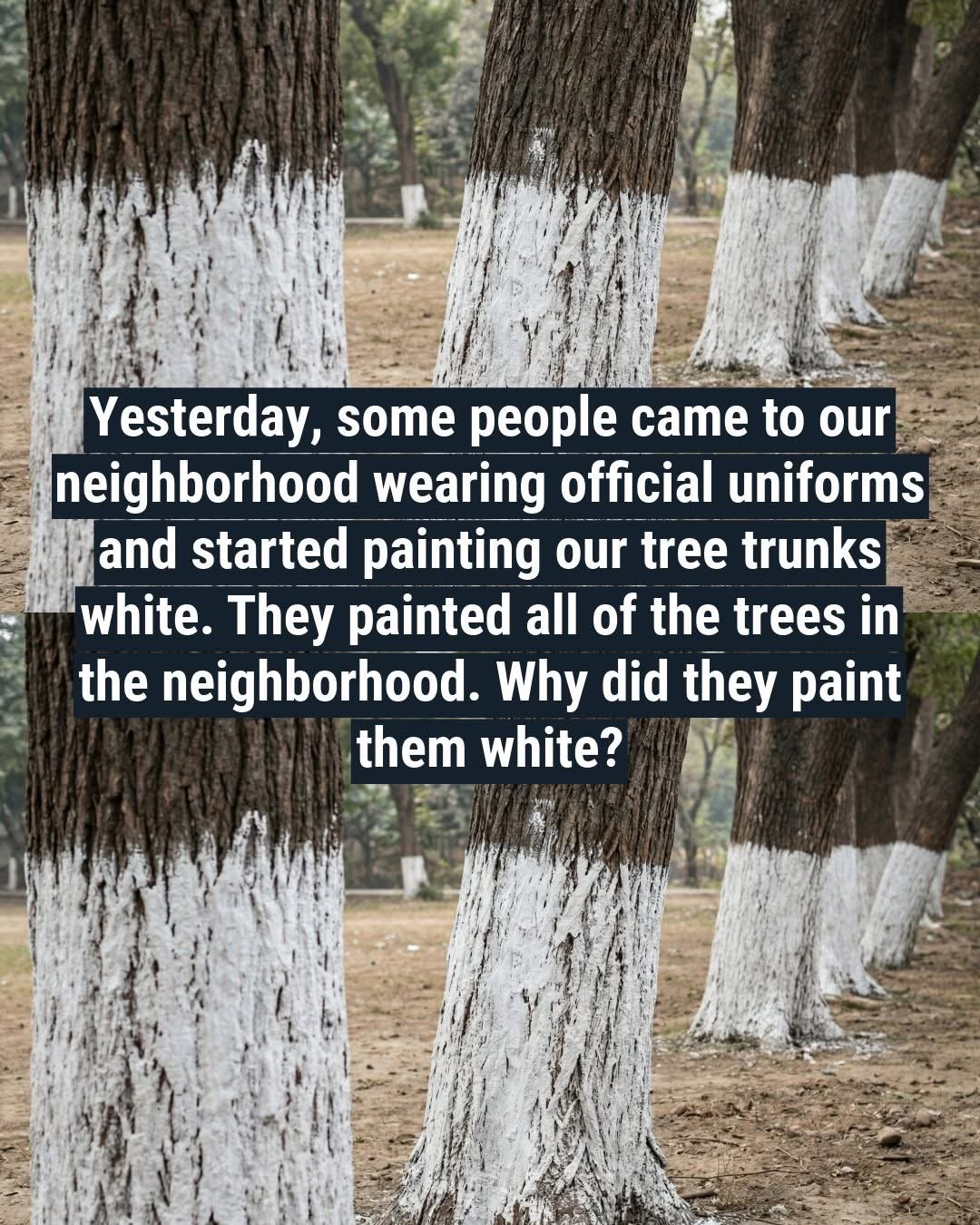
If you’ve ever spotted trees with their lower trunks coated in white, you’re seeing a practical care technique, not a decorative choice. This simple step helps protect bark from winter sunscald—a condition caused by sharp temperature shifts between cold nights and bright daytime sun. When the sun warms one side of the trunk, the tissue can expand unevenly and later contract as temperatures drop, leading to cracks. A light-colored coating reflects sunlight, keeping the bark temperature more stable and reducing the risk of damage.
This method is especially helpful for young trees, newly planted specimens, and many fruit trees, all of which have thinner, more vulnerable bark. To apply it, choose a water-based, exterior latex paint and dilute it with water to create a breathable, easy-to-spread mixture—commonly at a 1:1 ratio. Using a brush rather than a sprayer ensures even coverage and better adhesion, particularly around natural grooves in the bark. The goal is a thin, consistent layer that protects without sealing the tree.
For added resilience, some gardeners mix in a small amount of joint compound to thicken the coating slightly. This can improve durability and may help discourage certain insects from settling into the bark. Apply the mixture from the base of the trunk up to the first set of major branches, focusing on the side that receives the most sun. Reapply once a year, ideally in late fall, so the coating is in place before winter conditions arrive.
It’s worth noting that different colors on trees can signal different things in various settings, but a white-painted trunk is purely about protection and care. Think of it as a seasonal shield that supports the tree’s long-term health. With a few basic materials and a bit of planning, this straightforward practice can help trees stay strong, resilient, and better prepared to handle changing weather year after year.