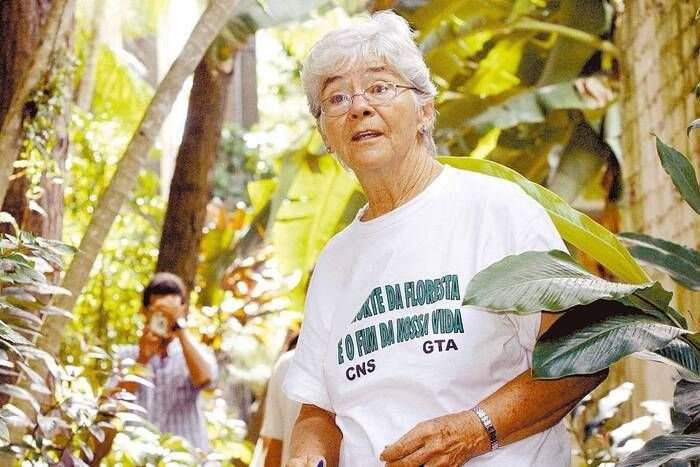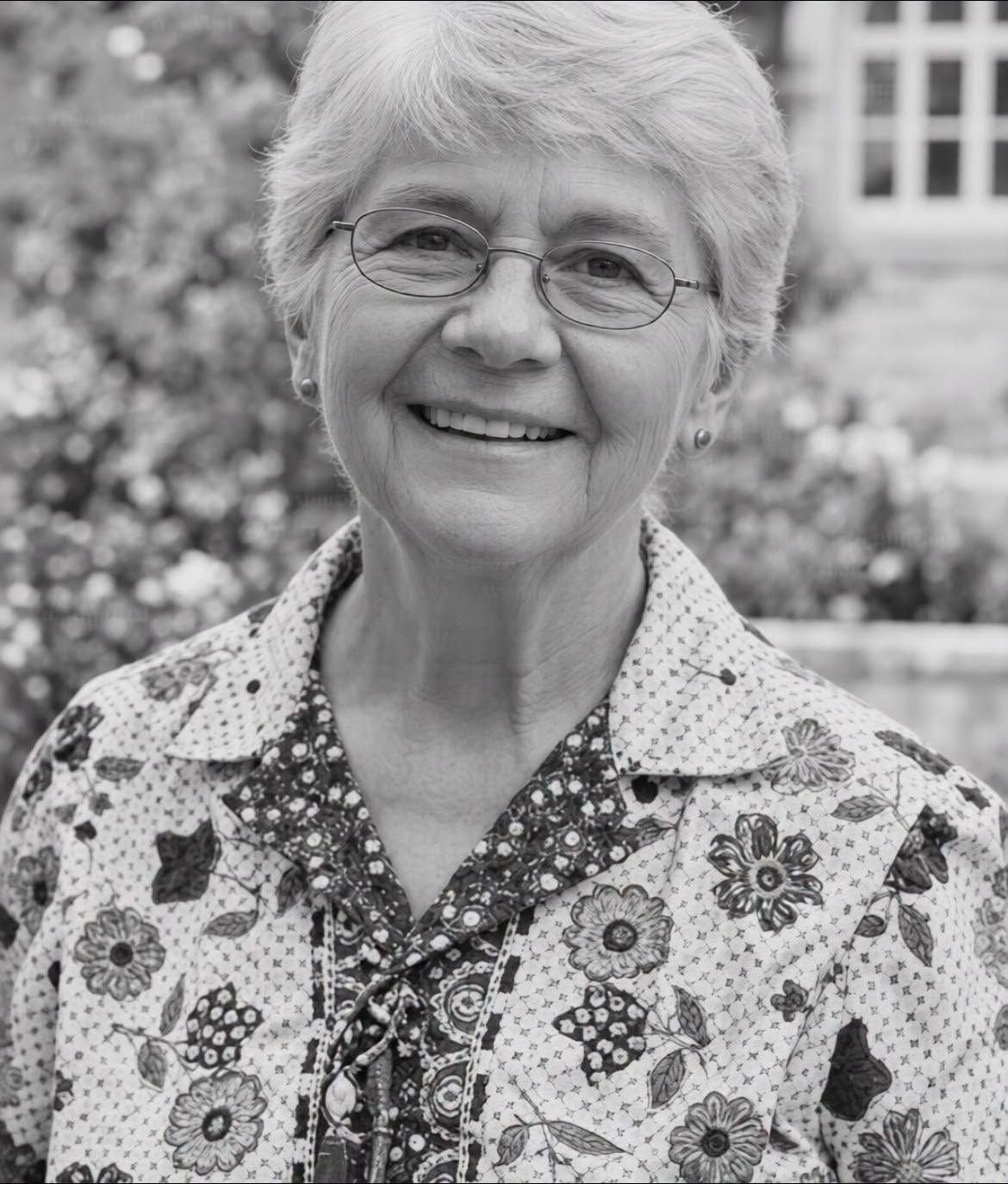
On a lonely dirt road deep inside Brazil’s Amazon rainforest, a 73-year-old Catholic nun stood face to face with two armed men. The men had followed her into an isolated area where few people could hear a cry for help. They knew who she was. They knew the work she had been doing. And they knew that her presence had become a problem for those who wanted control over the land.
When they asked whether she had any weapons, Dorothy Stang reached into her bag.
What she pulled out was not a gun, a knife, or anything that could physically protect her.
It was a Bible.
That moment would become one of the most remembered images connected to Dorothy’s life — an elderly woman choosing faith and conviction in the face of violence. But before she became known around the world as a symbol of courage, Dorothy lived a life that appeared far removed from conflict.
She was born on July 7, 1931, on a modest farm in Dayton, Ohio, as one of nine children in a family where faith, discipline, and hard work shaped daily life. Growing up in a large farming family taught Dorothy important lessons about responsibility and community. She learned that survival depended on people helping one another and that every person had value.
At only 17 years old, Dorothy joined the Sisters of Notre Dame de Namur. She devoted herself to a life of service and spent the next fifteen years teaching children in American schools. For many years, her world revolved around classrooms, students, and religious work.
Nothing about her early life suggested that she would one day become a central figure in one of the most dangerous land conflicts in the Amazon.
But Dorothy believed that faith was not simply something practiced inside a church. She believed it required people to stand beside those who had been forgotten.
In 1966, at the age of 35, Dorothy made a decision that changed everything. She boarded a plane bound for Brazil.
She would spend the rest of her life there.
The Amazon she entered was a place of extraordinary beauty and extraordinary hardship. Behind the endless rainforest were millions of people struggling for survival. Poor farmers and Indigenous communities faced displacement, violence, and uncertainty as powerful groups competed for control of valuable land.
Dorothy saw more than a forest.
She saw people.
And she decided to stay.
Building Communities Among the Forgotten of the Amazon
When Dorothy Stang arrived in Brazil, she entered a world completely different from the one she had known in the United States. Many communities in the Amazon were separated by enormous distances, with families living in areas where electricity, healthcare, and education were often unavailable.
For many poor farmers, land was the foundation of survival. It provided food, shelter, and hope for future generations. But many families lacked legal documents proving ownership, leaving them vulnerable to powerful individuals and companies seeking control of the territory.
Dorothy did not approach these communities as someone coming to save helpless people.
She believed they already possessed strength.
What they needed was knowledge, organization, and the ability to defend their own rights.
She learned Portuguese so she could communicate directly with local residents. She studied Brazilian land laws because she understood that legal knowledge could protect families from exploitation. She traveled into remote areas where few outsiders were willing to go.
The people began calling her “Dora.”
Some called her the “Angel of the Amazon.”
But Dorothy never worked for admiration.
She worked because she believed every person deserved dignity.
She helped farmers organize so they could defend their land through legal methods. She created educational opportunities for children who had never stepped inside a classroom. She taught adults how to read so they could understand official documents and recognize when their rights were being violated.
To Dorothy, education was more than learning.
It was independence.
A farmer who could read a contract was harder to deceive.
A community that understood the law was harder to silence.
She also promoted sustainable farming practices, showing families that they could earn a living without destroying the rainforest that surrounded them.
Her message was simple: protecting the environment and protecting people were not opposing goals.
They were connected.
Over the years, her work transformed communities. Children gained access to education. Families developed more stable incomes. Farmers who once faced problems alone began standing together.
But every victory created resistance.
Those who benefited from illegal land seizures and uncontrolled exploitation of the Amazon saw Dorothy as a threat.
She was giving people something more powerful than money.
She was giving them a voice.

The Amazon Conflict and the Growing Danger Around Her
By the time Dorothy Stang entered her later years, she had already spent decades working among some of Brazil’s poorest communities. Many people her age might have considered retirement, but Dorothy believed her mission was far from finished.
In 2000, when she was 69 years old, she moved to Anapu in Pará state, one of the areas where conflicts over land ownership were especially intense.
Anapu represented everything Dorothy had spent her life fighting against and fighting for.
It was a place where poor families struggled to protect their homes while powerful landowners sought greater control over territory.
Dorothy documented illegal land seizures. She helped farmers understand their legal rights. She reported threats and violence. She continued supporting sustainable communities even as tensions increased.
Her work brought real changes.
Some families who had once owned almost nothing were able to improve their living conditions. Children attended schools. Communities became more organized.
But those changes threatened people who profited from fear and instability.
The warnings started becoming more frequent.
There were threatening phone calls.
Messages delivered through others.
Attempts to intimidate her.
Dorothy was told to leave.
She refused.
She understood the danger, but she believed leaving would mean abandoning the very people who needed protection most.
“I don’t want to flee,” she said. “These farmers live without any protection in the forest. They have the right to aspire to a better life with dignity while respecting the environment.”
Those words reflected the principle that guided her entire life.
She did not believe courage meant the absence of fear.
She believed courage meant continuing despite fear.
By early 2005, the threats against her had become increasingly serious. Dorothy continued meeting with farmers, human rights officials, and community leaders.
She knew violence was possible.
But she continued walking the same roads.
The Final Walk Along the Boa Esperança Road
On February 12, 2005, Dorothy Stang left for another community meeting near the Boa Esperança settlement in Pará.
It was a normal day in the sense that it reflected the life she had chosen for nearly forty years: traveling, listening, helping, and standing beside people who often had nowhere else to turn.
A local farmer named Cícero was supposed to accompany her that day, but he was running late.
As he hurried toward the road, he noticed two men following Dorothy.
Realizing something was wrong, he hid among the trees.
The men were Clodoaldo Carlos Batista and Rayfran das Neves Sales.
They approached Dorothy on the isolated road.
The confrontation that followed lasted only moments, but it would be remembered for generations.
The men asked Dorothy a simple question.
“Do you have any weapons?”
The question carried an expectation.
They may have believed that Dorothy, knowing the dangers around her, would have some form of protection.
Instead, she reached into her bag and removed a Bible.
She opened it to the Beatitudes from the Gospel of Matthew.
She began reading.
“Blessed are the poor in spirit, for theirs is the kingdom of heaven.”
“Blessed are those who mourn, for they will be comforted.”
“Blessed are those who hunger and thirst for righteousness…”
According to accounts of the killing, Dorothy continued reading Scripture as the men stood before her.
Then Rayfran raised his revolver.
The first bullet struck Dorothy in the abdomen.
She fell to the ground.
Five more shots followed.
Six bullets ended the life of a woman who had spent decades defending people who had little protection of their own.
Dorothy Stang was dead.
She was 73 years old.
But the men who killed her underestimated the power of the story they had created.
They believed they were removing an obstacle.
Instead, they transformed Dorothy into a worldwide symbol of commitment, courage, and sacrifice.
The Investigation and the Search for Justice
News of Dorothy Stang’s murder spread quickly across Brazil and around the world.
Her death exposed the dangerous reality of land conflicts in the Amazon, where disputes over territory had long been connected to violence against farmers, environmental defenders, and community leaders.
The Brazilian government responded with increased attention to the region and announced additional protections for areas connected to conservation and community rights.
The investigation into Dorothy’s murder continued.
Authorities eventually convicted five men connected to the killing.
Rayfran das Neves Sales, the gunman who carried out the shooting, received a 27-year sentence.
Other men accused of organizing the murder, including ranchers involved in the land conflict, received prison sentences of 30 years.
Dorothy’s brother David attended the trials and watched the legal process unfold over many years.
For her supporters, the convictions represented an important step toward accountability.
But they also understood that Dorothy’s death was not an isolated event.
Land conflicts in Pará continued.
Other activists and community leaders continued facing threats.
The deeper problems Dorothy had fought against — poverty, inequality, and disputes over land — did not disappear when she died.
Her fellow religious sisters remained in Brazil.
They continued the work Dorothy had started, supporting communities and protecting the values she had dedicated her life to.
Near Dorothy’s grave, seedlings from a nursery were planted as a symbol of renewal.
The forest she worked so hard to protect continued growing.
A Legacy That Continued Beyond Her Death
Dorothy Stang’s influence continued long after February 12, 2005.
Her story became part of international discussions about human rights, environmental protection, and the challenges faced by communities living in the Amazon.
Scientists later honored her memory by naming a newly recognized owl species from the Amazon region the “Stang’s screech owl.”
The name reflected the connection between Dorothy and the rainforest she spent decades protecting.
Her religious community also continued preserving her memory.
In January 2025, twenty years after her murder, Dorothy’s relics were enshrined at Rome’s Shrine of Modern Martyrs, recognizing her as one of the many figures remembered for sacrificing their lives in service of others.
But perhaps the most meaningful tribute came not from official ceremonies.
It came from the people she had served.
When the ambulance carrying Dorothy’s body approached the morgue in Anapu, crowds gathered along the streets.
They remembered her.
They called her name.
They repeated the words:
“Sister Dorothy lives forever.”
Those who later saw her body remembered a detail that stayed with them.
Despite the violence of the attack, despite the mud and blood on her clothing, Dorothy’s face appeared peaceful.
Some said she seemed to be smiling.
For the people who loved her, that image represented the person Dorothy had always been.
A woman who believed fear could not defeat compassion.
The Bible That Became More Powerful Than a Weapon
Dorothy Stang entered the Amazon as a teacher.
She became a defender of farmers.
She became a voice for communities that had been ignored.
And after her death, she became a symbol recognized far beyond Brazil.
The men who confronted her believed power came from weapons.
Dorothy believed power came from truth, faith, education, and standing beside people who had been abandoned.
When they asked whether she had a weapon, she reached into her bag.
She did not pull out something designed to harm.
She pulled out a Bible.
That moment captured the essence of her entire life.
Dorothy never claimed she could eliminate every injustice.
She knew the problems of the Amazon were larger than one person.
But she believed one person could still make a difference.
For nearly forty years, she walked into places where others were afraid to go.
She sat with families who had lost hope.
She taught people who had been denied opportunities.
She defended communities that had almost no protection.
Her life showed that courage does not always appear in dramatic moments.
Sometimes courage looks like an elderly woman walking down a dirt road.
Sometimes it looks like a teacher refusing to abandon her students.
Sometimes it looks like a person choosing to stay when leaving would be easier.
Dorothy Stang carried no gun into the Amazon.
Her weapons were her faith, her knowledge, and her belief that every human being deserved dignity.
And decades after her final walk, the message she left behind remains unchanged:
Some battles are not fought with force.
Some battles are fought by refusing to leave when fear tells you to run.