It was supposed to be an ordinary trip to Paris.
Three lifelong friends from America were traveling through Europe, laughing, talking, and enjoying a vacation together.
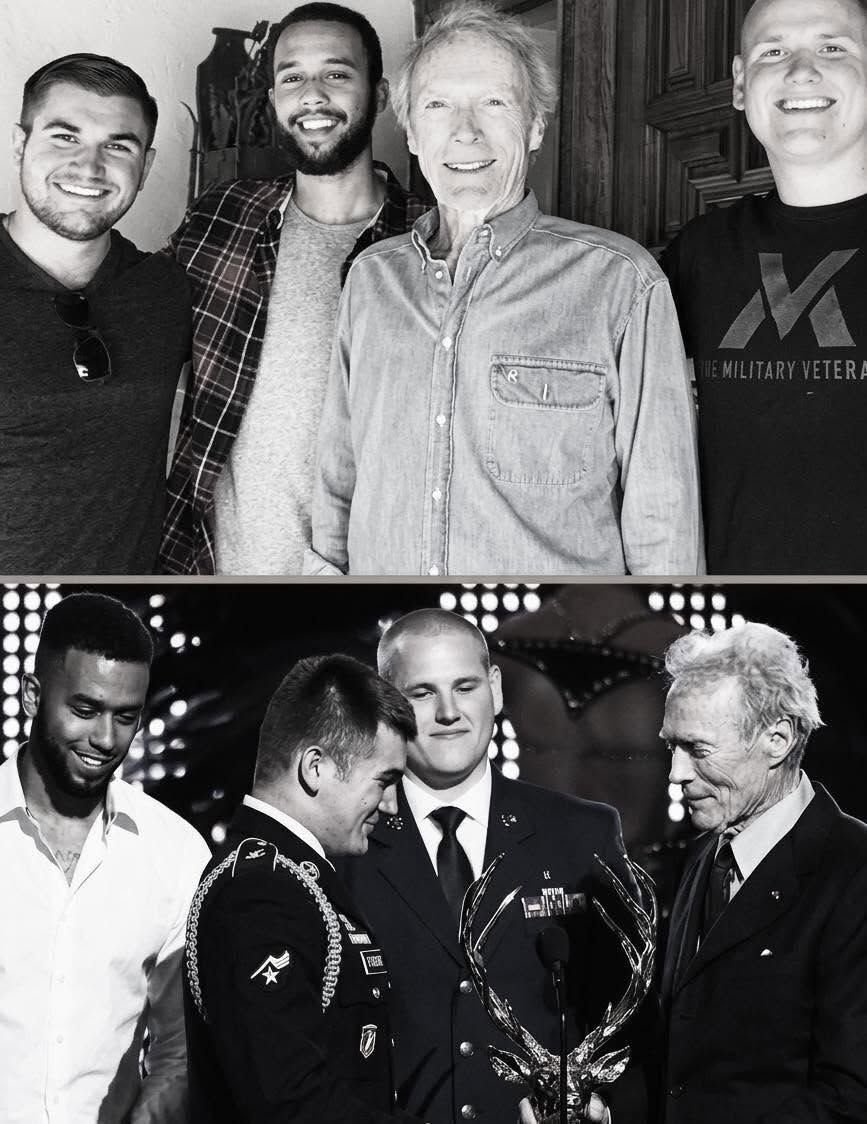
Spencer Stone.
Alek Skarlatos.
Anthony Sadler.
They were not traveling as a military unit.
They were not on a mission.
They were not looking for danger.
They were simply three friends enjoying time together.
But on August 21, 2015, aboard a Thalys train traveling from Amsterdam toward Paris, their vacation suddenly became something none of them could have imagined.
A heavily armed attacker emerged inside the train.
He had firearms and ammunition.
More than 500 passengers were aboard.
Families.
Couples.
Business travelers.
Tourists.
People who had boarded expecting nothing more dramatic than a journey through Europe.
Then the gunfire began.
And within moments, several ordinary passengers were faced with an impossible choice.
Hide.
Run.
Or move toward the danger.
What happened next would become one of the most widely remembered acts of civilian intervention in modern European history.
A Normal Train Ride
Before the attack, there was nothing unusual about the journey.
Passengers settled into their seats.
Some talked quietly.
Some looked through the windows.
Others rested or listened to music.
The train was doing what trains do every day.
Moving people from one city to another.
For the three American friends, the journey was part of a European vacation.
Spencer Stone, Alek Skarlatos, and Anthony Sadler had known one another for years.
Stone and Skarlatos had military experience, while Sadler was a college student.
But on that train, they were not thinking about combat.
They were tourists.
They were friends.
They were simply traveling.
Then the atmosphere changed.
A Man Emerged With a Weapon
Inside one of the train’s carriages, a heavily armed man appeared.
His name was Ayoub El Khazzani.
He had firearms and a large amount of ammunition.
The official account later described the potential consequences as catastrophic had he been able to continue his attack. French President François Hollande said the attacker had enough weapons and ammunition to cause a massacre and noted that more than 500 passengers were on the train.
But at first, the passengers did not know exactly what was happening.
They only knew that something was terribly wrong.
Panic began spreading.
People started moving away.
The normal sounds of a train ride disappeared beneath screams and confusion.
And then one passenger made the first move.
Mark Moogalian Did Not Wait
Mark Moogalian, a French-American passenger, encountered the attacker as he emerged from a train bathroom.
According to Hollande’s account, Moogalian immediately intervened.
He tried to wrestle the weapon away.
He disrupted the attack.
But during the struggle, he was shot in the neck.
He collapsed.
He was seriously wounded.
The situation could have ended very differently at that moment.
An armed attacker was still moving through the train.
Passengers were vulnerable.
And the people around him had only seconds to understand what was happening.
Among them were three friends who had been enjoying a vacation only moments earlier.
Spencer Heard the Chaos
Spencer Stone was awakened by the commotion.
He looked down the carriage.
What he saw was not something he could have expected when he boarded the train.
There was an armed man.
Passengers were fleeing.
A fellow traveler was seriously injured.
And the threat was moving through a confined space filled with people who had nowhere easy to escape.
Stone had military training.
Skarlatos did too.
But training does not make a person immune to fear.
They knew exactly what a firearm could do in a crowded train.
They knew the attacker was armed.
They knew they might be seriously injured or killed.
And yet they moved.
“Now.”
The three friends had almost no time to debate.
Alek Skarlatos reportedly looked at Spencer Stone and gave a simple command:
“Now.”
There was no long speech.
No complicated plan.
No guarantee of success.
Just a decision.
Move.
Stone went first.
He charged toward the attacker.
The man was armed.
Stone was not.
That fact alone reveals how dangerous the decision was.
But hesitation could give the attacker more time.
So Stone closed the distance.
The Fight in the Carriage
Stone tackled the attacker.
The two men struggled.
The situation became chaotic.
The attacker attempted to resist.
He had multiple weapons.
Stone was trying to prevent him from reaching them.
According to the official French account, Skarlatos then helped Stone wrest the rifle away from the attacker.
But the danger did not end.
The attacker still had other weapons.
A pistol.
A cutter.
The struggle continued.
Stone was injured in the head and hand.
The cutter caused serious wounds.
His thumb was badly injured.
Blood was flowing.
Yet he remained engaged.
The objective was not to win a fight.
The objective was to prevent the attacker from gaining control of a weapon again.
Alek Joined Him
Skarlatos moved into the struggle.
His military experience mattered in those critical seconds.
He helped remove the rifle from the attacker’s control.
Once the assault rifle was no longer in the attacker’s hands, the immediate threat changed.
But the man still resisted.
This was not over.
Anthony Sadler also joined the struggle.
Then another passenger stepped forward.
Chris Norman, a British businessman, became part of the group trying to restrain the attacker.
Other passengers also helped.
The response was no longer the action of three friends.
It had become a group effort.
Several people were now working together to keep the attacker from reaching another weapon.
Chris Norman Joins the Fight
Chris Norman was not a soldier.
He was a passenger traveling on the train.
But he recognized that the attacker needed to be restrained.
According to the French president’s account, Norman helped immobilize the attacker and tie him up, assisted by another passenger, Éric Tany, who was a railway worker traveling while off duty.
This detail is important.
The story is often remembered as the story of three American friends.
But they were not alone.
Other passengers contributed.
A French-American passenger had intervened first.
A British passenger helped restrain the attacker.
A railway employee assisted.
The train controller raised the alarm.
And medical personnel later treated the injured.
The survival of the passengers was not the work of one person.
It was the result of several people acting during an extraordinary emergency.
Spencer Was Still Bleeding
The fighting finally ended with the attacker restrained.
But Stone was badly wounded.
His face and hand had been injured.
Yet his attention immediately shifted to someone else.
Mark Moogalian was still lying nearby.
He had suffered a gunshot wound to the neck.
The injury was potentially fatal.
Stone had medical training.
He knew that uncontrolled bleeding could kill quickly.
So despite his own wounds, he went to Mark.
He applied pressure directly to the wound.
He kept pressure there.
And he stayed with him.
According to Hollande’s official statement, Stone administered first aid to Moogalian and “sans doute sauvé la vie” — likely saved his life.
The man who had just fought for his own life was now trying to preserve someone else’s.
The Train Was Redirected
Once the alarm was raised, the train was diverted to Arras.
The attacker remained restrained.
The injured passengers could receive medical attention.
Emergency services could respond.
What had begun as a normal international train journey had become a major security incident.
But the worst possible outcome had been prevented.
More than 500 passengers had been inside that train.
They had been surrounded by uncertainty.
And now they were alive.
The French president later emphasized the scale of what might have happened had the attacker been able to continue.
The Passengers Had No Guarantee
One of the most important details about the story is that the men who intervened did not know exactly how events would unfold.
They did not know whether the attacker had another weapon.
They did not know whether more attackers were present.
They did not know whether they would survive the struggle.
They knew only what they could see.
A weapon.
An injured passenger.
A crowded train.
And a rapidly unfolding threat.
That uncertainty makes the decision even more significant.
They were not acting with the benefit of hindsight.
They were acting before anyone knew the ending.
The Moment Fear Became Action
Courage is often described as the absence of fear.
But that is not what happened on the train.
The men had reasons to be afraid.
They were facing an armed attacker.
They were inside a confined carriage.
There were hundreds of other passengers nearby.
The risk was real.
What changed was not the presence of fear.
It was the decision to act despite it.
That distinction matters.
A person does not have to feel fearless to do something difficult.
Sometimes courage is simply recognizing that something has to be done and moving before fear has time to stop you.
France Honored Them
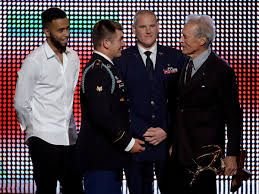
Three days after the attack, France publicly recognized the Americans and other passengers who had intervened.
François Hollande awarded Spencer Stone, Alek Skarlatos, Anthony Sadler, and Chris Norman the Légion d’honneur, France’s highest national distinction.
The ceremony brought attention to what had happened inside the train.
But Hollande also emphasized that others had played important roles.
Mark Moogalian had intervened first.
Éric Tany had helped.
The train controller had raised the alarm.
Medical teams treated the wounded.
The event was not simply a story about individual bravery.
It was a story about people responding together during an emergency.
Spencer Stone’s Story Continued
The train attack did not become the final dramatic chapter in Spencer Stone’s life.
Weeks later, back in California, Stone was seriously injured while intervening in a confrontation involving a friend.
He suffered multiple stab wounds.
Once again, he survived.
The coincidence was striking.
The man who had survived a violent attack on a train in Europe had later been seriously wounded while trying to help someone else.
But his story was no longer simply about one night on a train.
It had become a story about how one person’s experiences can shape the way he responds when someone else is in danger.
A Movie Followed
Three years after the train attack, Clint Eastwood directed a film based on the incident.
The movie was titled The 15:17 to Paris.
What made the project unusual was the decision to have Stone, Skarlatos, and Sadler portray themselves.
Instead of hiring actors to recreate the three friends, the men who had actually lived through the event stepped in front of the camera.
It was an unusual choice.
And it reflected something about the story.
These were not fictional characters created for a screenplay.
They were real people who had experienced a terrifying event and were now being asked to revisit it publicly.
Their lives had suddenly become part of a story known around the world.
The People Behind the Headlines
It is easy to reduce the event to a headline.
Three Americans stop a gunman.
But behind that headline were real people.
Mark Moogalian was injured.
Spencer Stone was wounded.
Other passengers were terrified.
Families were separated from one another for moments that must have felt endless.
And everyone on the train suddenly became part of an event they had never expected.
That is why the story should not be remembered only as an action sequence.
It was a human emergency.
People were frightened.
People were hurt.
And several passengers made decisions that changed what happened next.
More Than Three Men
Over time, the story has often been simplified.
Spencer.
Alek.
Anthony.
Three friends.
Three Americans.
Three people who ran toward the attacker.
That part is true.
But the larger story includes more people.
Mark Moogalian acted first.
Chris Norman joined the struggle.
Éric Tany helped restrain the attacker.
The train controller alerted authorities.
Medical professionals treated the injured.
And countless passengers endured the terrifying minutes until the danger had passed.
The official French account specifically recognized these different contributions.
Remembering them makes the story more complete.
A Train Full of Ordinary Lives
Think about everyone sitting in those carriages.
Someone might have been traveling to meet a friend.
Someone might have been returning from a business trip.
Someone might have been planning dinner in Paris.
Someone might have been texting family.
Someone might have been thinking about a hotel reservation.
None of them expected to become part of a major security incident.
That is what makes the story so unsettling.
Ordinary life can change in seconds.
A train ride can become a crisis.
A vacation can become a fight for survival.
And people who were strangers at one moment can suddenly depend completely on one another.
The Meaning of “Do Something”
Anthony Sadler later emphasized a simple lesson from the experience: when a crisis happens, people should understand that there is something they can do.
The statement was quoted by Hollande during the 2015 ceremony.
But the lesson should not be misunderstood as a universal instruction to physically confront an armed attacker.
The circumstances of an emergency are different every time.
Professional emergency services should be contacted whenever possible, and people must consider their own safety and the safety of others.
What the story demonstrates is something broader.
In a crisis, people can make a difference.
Sometimes that means helping an injured person.
Sometimes it means warning others.
Sometimes it means calling emergency services.
Sometimes it means following instructions.
And in extraordinary circumstances, some people may intervene directly.
The important point is that individual actions can matter.
The Difference One Decision Can Make
Nobody on that train knew how the story would end.
That is perhaps the most powerful part.
Spencer did not know.
Alek did not know.
Anthony did not know.
Chris did not know.
Mark did not know.
They had no guarantee.
Yet one decision followed another.
Mark intervened.
Spencer moved.
Alek joined.
Anthony helped.
Chris joined.
Éric assisted.
The controller raised the alarm.
Medical personnel responded.
Each action became part of a chain.
And that chain changed the outcome.
The Image That Remains
Years later, the image is still easy to imagine.
A train moving through Europe.
Passengers sitting quietly.
Then sudden panic.
A weapon.
A wounded man.
Three friends running toward the danger.
A struggle.
Blood.
A weapon taken away.
An attacker restrained.
A wounded passenger receiving first aid.
Then the train arriving at a station where emergency responders were waiting.
The sequence lasted only a short time.
But for the people inside the train, it must have felt much longer.
Their ordinary journey had been interrupted.
Their assumptions about safety had disappeared.
And strangers had become protectors of strangers.
What Happened That Day
The historical record is clear about the central events.
On August 21, 2015, an armed attacker attempted to carry out an attack aboard the Thalys train traveling from Amsterdam toward Paris.
Passengers intervened.
Mark Moogalian was wounded while attempting to stop the attacker.
Spencer Stone, Alek Skarlatos, Anthony Sadler, Chris Norman, Éric Tany and others helped restrain him.
Stone then provided first aid to Moogalian.
The train was diverted to Arras.
And French authorities subsequently honored several of those who intervened.
The event later became the basis for Eastwood’s film The 15:17 to Paris.
These are not the details of a fictional adventure.
They happened to real people.
The Friends Who Went on Vacation
Perhaps that is what makes the story so memorable.
Spencer, Alek, and Anthony did not wake up that morning expecting to become heroes.
They were simply friends traveling together.
They were supposed to take photographs.
See Europe.
Visit Paris.
Enjoy a vacation.
Instead, they found themselves in a situation that demanded an immediate decision.
And when the moment came, they moved.
Their story does not mean that courage is easy.
It does not mean that fear disappears.
It does not mean that every emergency has a simple solution.
It means that sometimes ordinary people find themselves in extraordinary circumstances.
And when that happens, their choices can matter.
The People Who Made It Home
The train was filled with people who simply wanted to reach Paris.
They wanted to continue their journeys.
They wanted to return to their families.
They wanted to go home.
Because several passengers intervened, the attacker was restrained and the wounded received care.
More than 500 people were aboard.
And after the crisis, they were able to leave the train alive.
That is the part worth remembering.
Not simply the fame that came afterward.
Not the movie.
Not the medals.
The people.
Hundreds of passengers who boarded an ordinary train and found themselves inside an extraordinary crisis.
People who were strangers before the attack.
People who survived together.
Courage Is Often a Choice Made in Seconds
We often imagine courage as something grand.
A uniform.
A battlefield.
A medal.
A speech.
But sometimes courage happens in a train carriage.
It happens in seconds.
A person sees danger.
Fear arrives.
And then comes a choice.
Move.
Or wait.
The men on that train made their decisions without knowing the outcome.
That is why the story continues to resonate.
They were not characters in a movie when it happened.
There was no script.
No guarantee that everyone would survive.
No director shouting “cut.”
There was only a real emergency.
And real people.
The Train Eventually Reached Its Destination
The journey that began as a vacation ended very differently.
The passengers were shaken.
Some were injured.
But the train did not become the site of the mass-casualty attack the gunman had apparently intended.
The people who had boarded expecting an ordinary trip were eventually able to continue with their lives.
Some would remember the incident every day.
Others might never speak about it publicly.
But all of them shared one extraordinary experience.
For a few minutes, their lives depended on the actions of people they had never met.
And those people stepped forward.
What Remains After the Headlines Fade
The awards were presented.
The interviews happened.
The movie was released.
The headlines eventually disappeared.
But the deeper story remained.
Courage is not always loud.
Sometimes it is simply the willingness to help another person when the situation becomes frightening.
The people aboard that train could not know what the future held.
Neither could the three friends.
But they acted in the present.
One decision.
One movement.
One person helping another.
Then another.
And another.
That chain of actions is what changed the story.
Three Friends, One Terrifying Moment
Spencer Stone, Alek Skarlatos, and Anthony Sadler boarded the train as friends.
They expected memories of Europe.
Instead, they left with a story that would follow them for the rest of their lives.
Their names became known around the world.
They received France’s highest national decoration.
Their story became a movie.
But before all of that, they were simply three people on a train.
Three friends who saw something terrible happening.
And three people who decided to move.
Their story is not important because they were destined to become famous.
It is important because they were not.
They were ordinary passengers confronted by an extraordinary situation.
The Lasting Image
Years later, the most powerful image is still not the medal ceremony.
It is not the movie poster.
It is not the headlines.
It is a train.
Hundreds of people inside.
An attacker moving through the carriage.
A wounded passenger on the floor.
And three friends running toward the danger.
They did not know whether they would survive.
They did not know whether their efforts would succeed.
They did not know what would happen next.
They only knew that something had to be done.
And so they moved.
The story of the Thalys attack is ultimately a story about people responding to a moment none of them had chosen.
It is also a reminder that history is often changed not only by presidents, generals, or institutions, but by ordinary people making extraordinary decisions in a matter of seconds.
Three friends boarded a train expecting a vacation.
They left it having helped prevent a far greater tragedy.
And for the hundreds of passengers who continued their journey that day, those few seconds changed everything.
They were supposed to be tourists.
Instead, they became part of the reason so many people made it home.