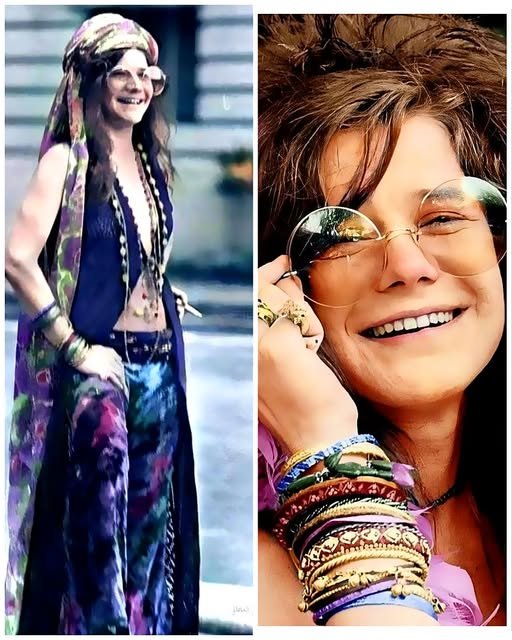
Janis Joplin was 27 years old when she died alone in room 105 of the Landmark Motor Hotel in Los Angeles on October 4, 1970. Outside, her Porsche—a kaleidoscope of wild paint, colors colliding like the life people assumed she lived—sat as a symbol of freedom, chaos, and noise. But inside that room, the woman who had screamed the blues as if her heart was being torn apart had reached the quietest, loneliest ending imaginable.
Her life was a paradox. Onstage, she could command thousands, pouring raw emotion through every note. Offstage, loneliness followed her like a shadow that applause could never banish. One line she left behind still resonates: “Onstage, I make love to twenty-five thousand people, and then I go home alone.” In those words lies Janis in a single sentence. She could make strangers feel chosen with a glance, a scream, or a wail. Yet the world never saw the empty space behind those eyes.
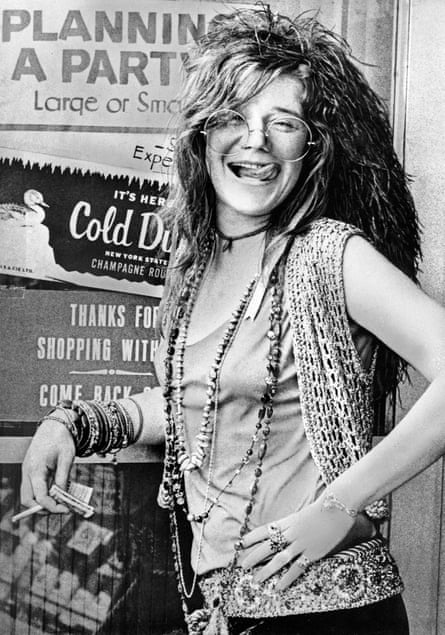
The Texas Roots of a Rock Icon
Janis Lyn Joplin was born in Port Arthur, Texas, on January 19, 1943. From an early age, she was bright, artistic, and unmistakably different. In a town where conformity ruled, Janis’s quirks, her intensity, and her refusal to shrink made her stand out. She sought refuge in music, particularly the blues, drawing inspiration from voices like Bessie Smith and Big Mama Thornton—women who sang pain without sugarcoating it. They taught her that honesty in a voice was more important than perfection, and that rawness could be transcendent.
But honesty made her vulnerable. Before the world celebrated her genius, she was often mocked for her looks, ideas, and unconventional style. She wore what she wanted, spoke her mind, and refused to be invisible. Classmates labeled her strange, townsfolk misunderstood her, and early crushes turned indifferent. These wounds lingered, and fame would later cover them, but never heal them.
Finding Home in San Francisco
When Janis arrived in San Francisco in the mid-1960s, she found a city alive with color, freedom, and music—a place where her wildness could be celebrated rather than hidden. Joining Big Brother and the Holding Company, she discovered musicians who matched her intensity and fans who understood her rebellion. The Haight-Ashbury scene embraced her style, her voice, and her fearless approach to life.
Monterey Pop Festival in 1967 became her first explosive showcase. Performing “Ball and Chain,” she sang with such raw force and vulnerability that seasoned music critics and audiences alike were stunned. Janis did not simply sing a song; she bled in public, and the beauty was in her pain. Observers might have said, “This girl performs not for applause, but to survive the next five minutes of her life.” That urgent authenticity made her impossible to ignore.
The Rise to Stardom
In 1968, the album Cheap Thrills catapulted Janis into fame. “Piece of My Heart” became an anthem for anyone who had loved too hard and received too little in return. Her voice, ragged and urgent, carried the desperation and intensity of a life lived in extremes. Woodstock in 1969 cemented her status as a rock icon, and her later work with the Full Tilt Boogie Band and the posthumous album Pearl would immortalize her talent.
“Me and Bobby McGee” gave her a number-one hit after her death—a cruel irony that she never got to hear the world singing back her own soul. Fame brought fans, lovers, parties, and attention, but it could not fill the emptiness she carried from childhood. Her longing to be loved as a person, not just worshipped as a performer, remained unmet.

The Private Struggles Behind the Stage
Janis once said, “Being an intellectual creates a lot of questions and no answers. You can fill your life up with ideas and still go home lonely.” This sentiment was more than philosophical musing—it was a confession. Despite her fame, she grappled with loneliness, insecurity, and longing. Her laughter often masked fear. Her drinking and drug use were both celebration and escape.
Those who knew her closely spoke of her generosity, humor, and warmth, even as they saw the insecurities that lurked beneath. She could be reckless, tender, funny, and electric within the span of a single hour. Her life was lived at full volume because the quiet terrified her. Stage performances were more than entertainment; they were a lifeline, a way to make pain tangible and, paradoxically, beautiful.
The Human Cost of Fame
One voice from her circle observed, “Everybody wanted a piece of Janis Joplin, but not everybody understood that pieces were all she had left to give.” Her fame was both a blessing and a trap. The louder the applause, the more expectations pressed on her shoulders. Fans adored the fire in her voice, but few understood the loneliness that fueled it. Every performance was a transaction: Janis gave herself to the audience in exchange for connection that could never truly be permanent.
Her death at 27, in a motel room far from the stage, illustrated the stark contrast between public adoration and private isolation. The car outside was still vibrant and loud, but inside, silence reigned. Janis had reached the limit of what performance, fame, and temporary companionship could sustain.
A Legacy Etched in Human Voice
Janis Joplin did not become unforgettable because she was flawless or “perfect.” She became immortal because she sounded human in a world often fake, hollow, or superficial. Her voice, raspy and explosive, remains a testament to vulnerability turned into art. It’s a reminder that brilliance often comes with pain, and that true power resides not in polish, but in honesty.
She screamed the blues so the world could feel her heartbeat, her hunger, her heartbreak, and her rebellion. And even as her life ended in quiet solitude, her voice continues to resonate, a fire that refuses to disappear. For listeners today, hearing Janis Joplin is like touching the raw edge of human emotion—beautiful, imperfect, and achingly real.
The Enduring Lessons from Janis Joplin
Janis’s story is a study in contradictions: strength paired with vulnerability, public worship paired with private isolation, joy paired with longing. She teaches us that authenticity demands courage, and that brilliance can coexist with brokenness. Her life reminds artists, fans, and dreamers that the pursuit of truth in expression often comes at a personal cost.
Yet, perhaps her greatest gift is hope. Through her voice, we understand that our deepest pains can be transformed into something that resonates far beyond ourselves. Janis Joplin may have left the world too soon, but she left a sound that refuses to fade, echoing the human spirit in all its raw, chaotic, and beautiful complexity.