I thought my sister had come back to take the boy I’d raised for 14 years. Then Noah said her name before I introduced her, and suddenly the folder in her hands wasn’t what scared me most.
“I came back for him the next morning.”
Noah went completely still behind me.
Rachel’s fingers tightened around the folder she’d brought to my door.
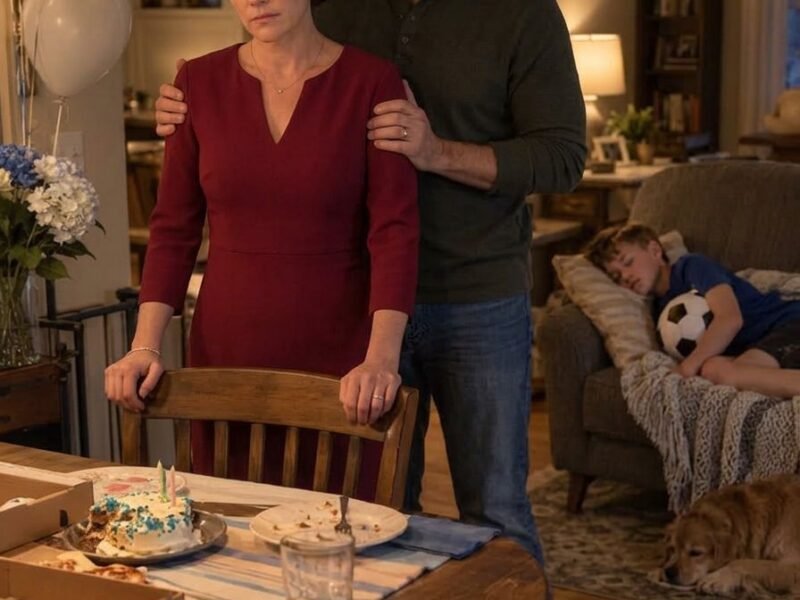
Fourteen candles were burning on the cake in my dining room. Noah’s friends were laughing somewhere beyond the hallway, unaware that the woman who had disappeared when he was six weeks old had just walked back into our lives.
“Who told you I’d gone out?”
Rachel looked at me for a long moment.
Our mother had been dead for six years.
Rachel glanced toward Noah.
“Can we please go somewhere private?”
I wanted to shut the door in her face.
Instead, I went into the dining room, blew out Noah’s candles before they melted into the frosting, and told his friends we’d had a family situation. Within minutes, they were downstairs with pizza and video games.
Then the three of us sat around my kitchen table.
Rachel placed the folder between us.
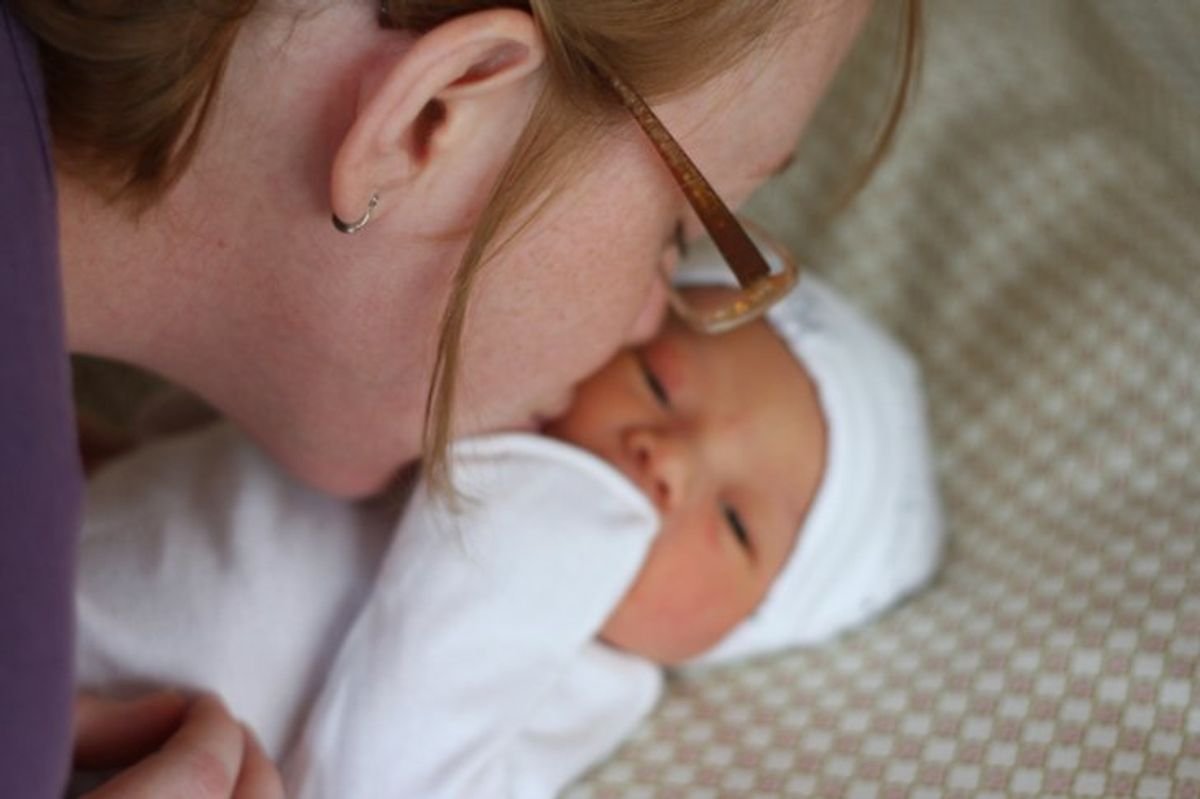
Nearly 14 years earlier, she’d appeared at my apartment holding a six-week-old baby.
Her hair hadn’t been washed. Formula had dried on her sweatshirt, and she kept shifting Noah between her arms as though she couldn’t find a comfortable way to hold him.
“Can you watch him for a few hours?”
She left his diaper bag beside my couch, kissed his forehead, and walked out.
At first, I called constantly.
Then I called hospitals, friends, her old roommate, anyone who might know where she was.
At least, I thought she did.
After several days, Rachel’s phone stopped working.
Eventually, I stopped expecting footsteps outside my apartment.
I hired an attorney, reported what had happened, and began the long process of making sure I could legally care for Noah. There was nothing quick about it. Rachel couldn’t be located, notices had to be published, and paperwork seemed to multiply every time I touched it.
Eventually, I became Noah’s legal guardian.
Years later, I adopted him.
But none of those papers were what made him mine.
It was walking the hallway at three in the morning because he wouldn’t sleep unless someone hummed.
It was the first time he called me “Mama” by accident. He was two years old and looked confused when I started crying.
It was kindergarten, when he refused to let go of my coat until his teacher distracted him with a plastic dinosaur.
It was sitting on the bathroom floor when he had the flu, assembling science projects at midnight, and discovering that raisins apparently became poisonous if I put them in oatmeal.
And I never lied about Rachel.
A photograph of her in the blue album was on our bookshelf.
When Noah asked who she was, I told him.
“She’s the woman who gave birth to you.”
When he was little, I kept the answer simple.
“She wasn’t able to take care of you.”
As he grew older, the questions changed.
“Did she know where we lived?”
That last answer always bothered him.
But I thought I knew the important part.
Now she was sitting across from me, saying that wasn’t the whole truth.
“You went to the pharmacy the morning after I left Noah.”
I remembered that morning.
Noah had developed a rash around his neck. Mom came over while I ran out for diaper cream and more formula.
I was gone maybe 40 minutes.
Rachel tapped the table. “I came back during those 40 minutes.”
Noah looked between us. “What happened?”
Rachel swallowed. “Your grandmother met me downstairs.”
“Mom would’ve called me.”
Rachel pulled a brown envelope from the folder. It was old, bent at the corners, with our mother’s handwriting across the front.
My name was written on it.
The envelope had already been opened. Inside was a letter.
Rachel spoke before I could read.
“Mom gave me that six months before she died.”
My chair scraped against the floor.
Mom wrote that when Rachel returned, she’d been furious.
Rachel had spent the night at a friend’s apartment sleeping for the first uninterrupted hours she’d had since Noah was born.
“I wasn’t leaving forever,” Rachel said. “I hadn’t slept properly in weeks. I thought if I could get one night where nobody needed me, I’d come back and figure everything out.”
“You could’ve told me that.”
Mom hadn’t believed her either.
According to the letter, she’d told Rachel that disappearing overnight proved she was unstable and selfish.
That part didn’t surprise me.
Mom had always been hardest on Rachel.
Then I reached the next paragraph.
“She told you I didn’t want you back?”
Mom had told her I’d spent the entire night crying and had already decided to keep Noah.
Worse, she’d told Rachel I’d contacted the authorities and that if Rachel tried to take him, they’d be involved.
“She said you’d finally bonded with him,” Rachel whispered. “She said taking him away again would be cruel.”
I stared at her. “And you believed that?”
“I was 22, exhausted, broke, and already convinced I was ruining his life.”
Rachel looked down. “Yes.”
There was no excuse in the word.
Now he asked, “Did Grandma tell Aunt Sarah you came back?”
I already knew the answer.
For months afterward, Mom had sat beside me making phone calls.
She’d held Noah while I cried.
She’d brought groceries when I couldn’t leave the apartment.
Once, after I’d spent an entire night trying to settle him, she’d taken him from my arms and said, “Some people aren’t meant to be mothers.”
I’d thought she meant Rachel.
Now I wondered whether she’d been trying to convince herself.
“But that still doesn’t explain 14 years,” I said.
Rachel nodded. “No. It doesn’t.”
She pulled several more papers from the folder.
“I left town. Mom gave me money for a bus ticket and told me the kindest thing I could do was stay gone.”
“You could’ve called me.”
“You could’ve come back a week later.”
Her eyes filled. “I know, Sarah.”
“Stop saying that like it fixes anything.”
That answer took some of the fight out of me.
“I spent years telling myself he was better with you. At first, I was terrified. Then I was ashamed. Eventually, that stopped being fear and became cowardice. That’s mine, Sarah. Not Mom’s.”
Noah was watching her carefully.
Six months before she died, Mom had contacted Rachel.
She confessed what she’d done and gave Rachel the letter addressed to me.
Rachel’s eyes dropped. “Because I didn’t send it.”
I laughed once, without humor.
She’d found photographs online.
Noah at a school concert. Noah holding a baseball trophy.
One of us at his eighth birthday, when he’d insisted I wear the same ridiculous foam hat he did.
“You looked happy,” Rachel said.
“So you decided for us again.”
Noah leaned forward. “You could’ve let me decide.”
Rachel looked at him. “Yes.”
That was the first time she cried.
She wiped her cheek quickly. “You’re right.”
Then I remembered the folder. “How did Noah find you?”
He answered before Rachel could.
Inside our blue family album was an old photograph of Rachel holding him at the hospital. On the back, Mom had written Rachel’s full name.
Eventually, he found a photography page belonging to her.
Five months ago, he sent one message.
“Are you Rachel? I’m Noah.”
Rachel said she’d stared at it for almost an hour before answering.
Their first emails were cautious.
Noah asked what music she liked. Whether he looked like his father. Whether she remembered holding him.
Then he asked why she’d left.
“I didn’t tell him about Mom,” she said. “Not at first.”
“Because I didn’t have the right to turn his grandmother into the villain so I could look better.”
That landed harder than I expected.
Then came Noah’s question about living with her.
I picked up the printed email again.
“Do you think she’d let me live with you if I asked?”
“You really wanted to know whether she’d choose you?” I asked.
His eyes stayed on the table.
“Everyone always says she left because she couldn’t be a mom. I just wanted to know if that was still true.”
I reached toward him. He pulled his hand away.
That tiny movement hurt more than anything Rachel had said.
“I’m not leaving,” he added quickly. “I wasn’t asking because I wanted another house.”
“Then why hide this from me?”
“Because I knew you’d be scared.”
Rachel slid the remaining papers toward me.
They weren’t custody documents.
They included a signed statement documenting that she had no intention of challenging the adoption, along with Mom’s original letter and copies of the emails she’d exchanged with Noah.
“I spoke to an attorney,” Rachel said. “I wanted you to know exactly why I was here.”
“You did that before coming?”
“Because the first thing your mother needed to know was that I wasn’t here to take her son.”
For 14 years, I’d called myself Noah’s aunt whenever I explained how our family began.
Rachel had just called me his mother.
He looked at me. Then he reached across the table and took my hand.
Rachel didn’t ask to stay for the party.
At the front door, Noah followed her.
“Are you disappearing again?” he asked.
She took a business card from her purse. Her address and phone number were printed on it.
“So don’t trust promises yet. Watch what I do.”
Noah studied the card. “Okay.”
I wasn’t ready to hug her. I wasn’t ready to forgive her.
But I opened the door without telling her never to return.
For the next several months, Rachel did exactly what she’d promised.
She emailed Noah. She came for coffee when I agreed.
The first time, she stayed 40 minutes and didn’t touch him until he hugged her goodbye.
She attended one soccer game and sat three rows behind me until Noah spotted her.
“Why are you sitting over there?” he called.
I moved my bag off the seat beside mine.
Sometimes Noah asked questions that made the room go quiet. Sometimes Rachel answered.
Sometimes she said, “I don’t know how to explain that yet.”
Once, she canceled dinner because of work.
Noah barely spoke afterward.
I expected her to pretend it wasn’t a big deal.
Instead, she called the next morning.
“I said I’d show up,” she told him. “I didn’t. You get to be angry.”
Trust came back in embarrassingly small pieces.
I never forgave Mom neatly.
Some days I remembered the grandmother who packed Noah’s lunches and attended every school concert.
Other days I remembered the woman standing downstairs 14 years earlier, sending her frightened daughter away and then coming upstairs to help me search for her.
Both women were my mother, and I had to live with that.
Nearly a year after Rachel appeared at our door, I found Noah at the dining table with the blue album open.
Rachel’s hospital photograph was beside a newer picture from his 15th birthday.
In it, Rachel stood on one side of him.
He wasn’t smiling at either of us. He was laughing at something outside the frame.
“You rearranging things?” I asked.
Then he changed his mind.
He opened it again and slipped the new photograph into the empty sleeve opposite the old one.
I watched him smooth the plastic over it.
For years, I’d thought protecting Noah meant making sure the person who left couldn’t hurt him again.
Rachel had thought staying away was protecting him too.
Mom had made the worst choice of all because she’d convinced herself she knew what everyone needed.
Noah was the first one brave enough to stop letting other people decide for him.
He pushed the album toward the middle of the table.
“Leave it there,” he said.
Was Noah right to contact Rachel secretly, or should he have told Sarah before reaching out?
If you enjoyed this story, here’s another family shock you won’t see coming. A bride thought she was finally alone with her new husband after their wedding. Then she discovered someone hiding under their bed. But the real shock came when her groom explained why his mother was there. Click here to read the full story.