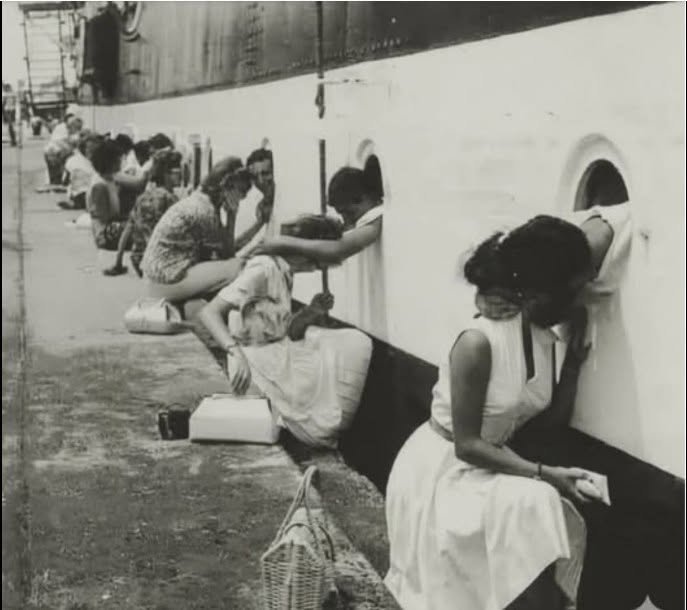
Born Into a Century That Would Not Stay Quiet
To be born in the year 1900 was to arrive at the threshold of a century that believed in progress but repeatedly delivered disruption instead. For a child entering life at the dawn of the twentieth century, the world still felt relatively stable in its everyday rhythms—horse-drawn carriages, coal-fired cities, telegrams carrying urgent messages across continents. Yet beneath that surface calm, global tensions were already building in ways no one could fully understand at the time.
A child born in 1900 would grow up hearing stories of empires rather than nations, of monarchs rather than presidents, of distant wars that seemed contained to faraway places. Education would emphasize discipline and duty, and childhood itself would often be brief, replaced early by work, responsibility, and expectation. There was little sense that the world was about to enter an era defined by mass industrial warfare, pandemics, economic collapse, and ideological extremism.
By the time that child reached adolescence, history would no longer feel distant or theoretical. It would arrive suddenly, violently, and without warning. The twentieth century did not unfold gently; it broke open in stages, each more destabilizing than the last. And those born at its beginning would not simply witness these events—they would live through them in real time, carrying their consequences in their bodies, families, and memories for the rest of their lives.
The First Shock: World War I and Adolescence
At age fourteen, childhood would end not through personal transition, but through global catastrophe. The outbreak of what is now known as World War I transformed adolescence into an introduction to mass death on an unprecedented scale. The war was not distant or abstract; it was present in newspapers, in ration lines, in empty chairs at dinner tables, and in the constant arrival of telegrams announcing loss.
Between the ages of fourteen and eighteen, a young person in 1900 would grow up alongside a world learning industrial-scale destruction. Trenches stretched across Europe like wounds in the earth. Machine guns turned battlefields into places where survival was often a matter of chance rather than strategy. Approximately twenty-two million people died, and millions more were physically and psychologically altered forever.
For those who survived adolescence during this period, adulthood began under the shadow of trauma. Even without direct combat experience, the emotional weight of witnessing a generation of young men disappear shaped how people understood life, responsibility, and the fragility of stability. The idea that civilization could collapse so completely in such a short time would remain deeply embedded in the consciousness of this generation.
A Silent Enemy: The Spanish Flu Pandemic
No sooner had the war ended than another invisible catastrophe arrived. The Spanish flu pandemic spread across the globe with terrifying speed, infecting a third of the world’s population and killing an estimated fifty million people. Unlike war, this enemy had no front lines, no uniforms, and no clear boundaries.
For a young adult who had already survived World War I, the pandemic represented a different kind of fear. There was no sense of victory or resolution—only exhaustion and uncertainty. Hospitals overflowed, burial grounds expanded rapidly, and entire communities were destabilized not by violence, but by illness that moved silently from house to house.
What made this period especially disorienting was the speed of transition from one catastrophe to another. There was no time to recover psychologically from the war before the pandemic demanded new forms of endurance. Trust in institutions weakened, and a sense of vulnerability became a permanent condition of life. Survival itself began to feel less like an achievement and more like a temporary state.
Collapse and Uncertainty: The Great Depression
By age twenty-nine, another crisis would redefine daily existence: the Great Depression. Triggered by the stock market crash, it rapidly spread across nations, dismantling financial systems and plunging millions into unemployment, poverty, and uncertainty.
For individuals born in 1900, this period was particularly brutal because it followed years of instability that had already weakened social and economic foundations. Jobs disappeared overnight. Savings evaporated. Entire industries collapsed. Families that had worked for decades to build stability suddenly found themselves struggling for basic survival.
What made the Great Depression so psychologically damaging was its persistence. Unlike war or disease, which had visible endpoints, economic collapse created a prolonged sense of helplessness. Hope became something fragile, dependent on external forces beyond individual control. People learned to adapt not by thriving, but by enduring.
This was also a time when identity shifted. Many who had once defined themselves by profession or status were forced to redefine themselves simply as survivors. The idea of dignity took on new meaning, no longer tied to success but to persistence through hardship.
Ideology and Fire: Rise of Nazism and World War II
At age thirty-three, a new and dangerous ideology began to rise in Europe. The emergence of Nazism in Germany introduced a political force that would reshape global history in catastrophic ways. Within a few years, the world would once again be engulfed in conflict through World War II, a war that would ultimately claim approximately sixty million lives.
For someone born in 1900, this meant entering middle adulthood under the weight of repeated global collapse. Unlike the first war, this conflict expanded across continents, involving civilian populations on a massive scale. Entire cities were destroyed. Genocides were committed. The moral and physical boundaries of warfare were stretched beyond anything previously imagined.
The psychological impact of living through two world wars within a single lifetime cannot be overstated. It reshaped concepts of trust, leadership, and humanity itself. The idea that progress might be linear was replaced by the more sobering recognition that history could regress as easily as it advanced.
Survivors of this era often carried a complex form of exhaustion—not just physical, but existential. They had seen both the heights of human cooperation and the depths of human cruelty, sometimes within the same decade.
A World Still at War: Korea and Vietnam
Even after the end of World War II, global instability did not cease. At age fifty-two, the Korean War began, dividing a nation and drawing international powers into another violent confrontation. For those who had already lived through earlier wars, this felt less like a new beginning and more like a continuation of an unresolved pattern.
At sixty-four, the Vietnam War extended this cycle further. By now, individuals born in 1900 were entering later life while still witnessing global conflict dominate headlines and political discourse. The hope that war might become an exception rather than a recurring reality had not yet been fulfilled.
These later conflicts were different in tone and visibility. Advances in communication technology brought war into living rooms through radio and television. For older generations, this created a unique form of dissonance: they had lived through the early twentieth century’s wars physically, and were now watching later wars unfold visually in real time.
It reinforced a difficult truth—that survival did not necessarily mean peace, and longevity did not guarantee relief from global instability.

The Weight of Survival and Misunderstanding Generations
To survive from 1900 into old age was to carry a lifetime of historical accumulation. It was to have lived through industrialized war, global pandemics, economic collapse, ideological extremism, and prolonged geopolitical conflict. Yet despite this, later generations sometimes view older people as having lived simpler, easier lives.
This perception overlooks the reality that endurance itself was a defining characteristic of the twentieth-century experience. Survival was not passive; it required constant adaptation to changing conditions that often exceeded individual control. Each decade introduced new challenges that demanded resilience not as an occasional necessity, but as a way of life.
What makes this generational story especially important is not only the scale of hardship, but the quiet persistence of those who lived through it. Many did not speak often about what they had seen. Some chose silence as a form of protection, others as a way of moving forward. But beneath that silence was a depth of experience that shaped families, communities, and cultures in ways that are still felt today.
To understand those born in 1900 is to recognize that history is not only a sequence of events—it is also a record of endurance. Their lives remind us that resilience is not an abstract concept, but a lived reality forged in conditions most of us will never encounter. And within that reality lies a powerful lesson: that survival itself can be one of humanity’s most profound achievements.