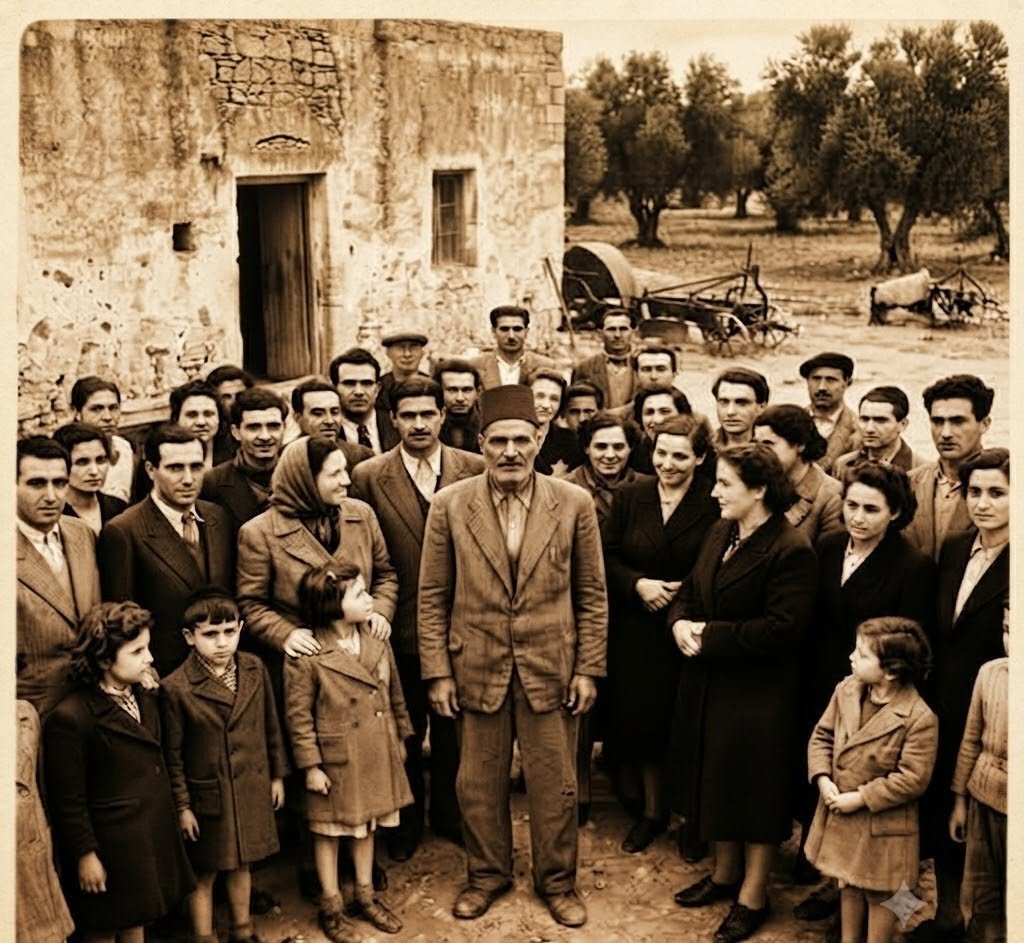
A Forgotten Story of Courage, Humanity, and Moral Defiance During the Holocaust
On a cold December night in 1942, in the small coastal town of Mahdia, Tunisia, a wealthy young Muslim man sat at a dinner table surrounded by Nazi officers. The conversation was filled with arrogance, cruelty, and the confidence of men who believed they controlled the fate of others.
The German soldiers drank wine, laughed loudly, and spoke about their power as if the lives of ordinary people meant nothing. They had arrived in Tunisia as representatives of Nazi Germany, bringing with them the same hatred and persecution that had already spread across much of Europe.
Among those sitting at the table was a Tunisian named Khaled Abdul-Wahab.
He was only 31 years old, educated, sophisticated, and respected among both Tunisian society and the German officers occupying the country. He had studied art and architecture in New York, spoke fluent German, and understood European culture well. Because of his background and his ability to communicate with them, Nazi officials treated him as someone they could trust.
They had no idea that the quiet man sitting across from them would soon risk everything to save the very people they wanted destroyed.
That evening, one German officer began telling a story that would change Khaled’s life forever.
The officer proudly described a Jewish woman he had chosen from a brothel established by the Nazis in the area. He laughed as he spoke about her humiliation and suffering.
Then he said her name.
Khaled immediately recognized it.
The woman belonged to the Boukhris family, a Jewish family he had known for years.
In that moment, something inside him changed.
He did not shout.
He did not confront the officer.
He did not reveal his anger.
Instead, he remained calm, smiled, poured more wine, and allowed the dinner to continue.
But inside, he had already made a decision.
He knew that if he waited until morning, it might be too late.
After the meal ended, Khaled offered to drive the German officer home. He carefully maintained the appearance of friendship and cooperation. The officer never suspected what was happening inside the mind of the man behind the wheel.
As soon as they left the dinner, Khaled drove quickly through the dark streets of Mahdia.
He was racing against time.
Near midnight, he stopped outside the home of the Boukhris family.
He knocked on the door.
When the family opened it, they were shocked to see him standing there.
His message was simple.
“Pack nothing. Come now.”
They did not fully understand what danger was coming, but they trusted him.
That decision would save their lives.
Tunisia Under Nazi Occupation: A Country Caught in the Shadow of War
To understand the bravery of Khaled Abdul-Wahab, it is important to understand the terrifying reality of Tunisia during World War II.
Tunisia was the only Arab country that experienced direct occupation by Nazi Germany during the war. When German forces arrived in late 1942 after the Allied invasion of North Africa, Jewish communities across the country suddenly found themselves facing a nightmare that had already consumed millions of lives in Europe.
For centuries, Tunisian Jews had lived alongside Muslim and Christian communities. They had built families, businesses, and traditions that were deeply connected to the country’s history.
But Nazi ideology did not care about centuries of shared life.
The occupation brought discrimination, humiliation, and violence.
Jewish citizens were forced to register with authorities. Many were stripped of their property. Thousands of men were arrested and sent to forced labor camps where they endured starvation, brutal treatment, and dangerous working conditions.
The yellow star, a symbol of Nazi persecution throughout Europe, was introduced in Tunisia as well.
Jewish families were forced to wear the mark of their identity on their clothing, turning them into visible targets.
Fear spread through communities.
People did not know who could be trusted.
A careless word could lead to arrest.
A neighbor’s betrayal could mean death.
In this atmosphere of terror, Khaled Abdul-Wahab made a choice that could have destroyed his own life.
He chose humanity over safety.
The Farm That Became a Sanctuary
After leaving the Boukhris family home that night, Khaled began organizing one of the most remarkable rescue efforts in Tunisian history.
He did not save only one person.
He saved an entire group of 25 people.
They included mothers, fathers, children, relatives, and elderly family members.
Under the cover of darkness, Khaled transported them nearly 20 miles away from Mahdia to his family’s farm.
There, hidden among olive trees and agricultural buildings, he created a secret refuge.
The people were concealed inside the olive press, storage areas, and stables.
Every corner of the farm became part of their survival.
But hiding 25 people during a Nazi occupation was not a simple act of kindness.
It was a constant risk.
If German soldiers discovered them, Khaled could have been executed.
His family could have lost everything.
His workers could have been punished.
Every day brought uncertainty.
Every sound of approaching vehicles created fear.
Every knock at the door could have been the end.
Yet Khaled continued.
For four months, he provided food and shelter while resources became increasingly limited.
He relied on his farm workers to keep the secret.
He protected children who could not understand why they had to remain silent.
He helped frightened families endure the psychological torture of waiting for discovery.
The people hiding on the farm were not simply guests.
They were lives placed entirely in his hands.
The Yellow Stars That Became a Symbol of Survival
One of the most extraordinary moments of their survival happened when German soldiers arrived at the farm to inspect and count Jewish families.
The hidden people knew that discovery would mean death.
They had nowhere to run.
They had no weapons.
They had no protection except their courage and Khaled’s plan.
Before the soldiers arrived, the Jewish families placed yellow stars onto their clothing.
They stepped outside and stood still.
They played the role expected of them.
The soldiers saw what they expected to see and eventually left.
When the danger passed, the stars were removed again.
Those small pieces of fabric represented one of the cruelest symbols of Nazi oppression.
But on that farm, they became something else.
They became proof of survival.
The Night a Nazi Soldier Discovered the Secret
The greatest danger came one evening when a drunk German soldier wandered onto the farm.
He was not supposed to be there.
He was unpredictable.
And then he discovered what Khaled had spent months protecting.
The hidden families froze.
Among them was an eleven-year-old girl hiding beneath a bed.
From her hiding place, she watched in terror as the soldier laughed, threatened them, and spoke about killing everyone.
For a child, those moments must have felt endless.
She believed death had arrived.
Then Khaled appeared.
What happened next became one of the memories she carried for the rest of her life.
Instead of panicking, Khaled remained calm.
He approached the soldier.
He spoke to him.
He convinced him to leave.
According to later testimony, Khaled managed to remove the soldier’s weapon and escort him away from the property.
The danger passed.
The families survived.
Nobody on that farm died.
The Hero Who Never Wanted Recognition
In May 1943, Allied forces liberated Tunisia.
The Nazi occupation ended.
The 25 people hidden on Khaled’s farm were finally free.
They returned to their homes.
They rebuilt their lives.
Many people would have expected Khaled to become known as a hero.
But he never told anyone what he had done.
Not newspapers.
Not government officials.
Not even his own family.
He returned to an ordinary life.
He married.
He raised children.
He continued his artistic work.
He served in government positions.
To the outside world, he was simply Khaled Abdul-Wahab.
A quiet man living a quiet life.
But hidden behind that ordinary existence was a story of extraordinary courage.
He carried the memory alone.
Perhaps he believed he had only done what any human being should do.
Perhaps he did not want praise.
Perhaps he simply did not think saving innocent lives was something worth announcing.
Whatever the reason, history almost lost his story forever.
A Daughter Discovers the Truth Decades Later
Khaled Abdul-Wahab died on September 4, 1997, at the age of 86.
When he passed away, his secret seemed destined to disappear with him.
Then, ten years later, something unexpected happened.
His daughter Faiza was sitting in a café in Paris reading a Sunday newspaper.
Inside the article was an interview with an American historian discussing a Tunisian Muslim man who had hidden 25 Jewish people during the Nazi occupation.
Then she saw the name.
Her father’s name.
Khaled Abdul-Wahab.
Faiza was 45 years old.
For her entire life, she had never heard this story.
The man she knew as her father had carried one of the most incredible acts of courage in modern history without ever mentioning it.
She contacted the historian.
The evidence was overwhelming.
One of the survivors had left behind 83 pages of testimony before her death.
The details matched.
The names matched.
The locations matched.
The memories confirmed what had happened decades earlier.
Faiza later said:
“I rediscovered my father.”
She had spent her life knowing one version of him.
Then she discovered another.
A man who quietly stood against one of the most evil movements in human history.
The Debate Over Recognition
Khaled Abdul-Wahab was eventually nominated for the title of “Righteous Among the Nations,” one of the highest honors given by Yad Vashem to non-Jews who risked their lives to save Jews during the Holocaust.
If recognized, he would have become the first Arab recipient of the honor.
However, the committee ultimately declined the nomination, explaining that they believed he had not faced enough personal risk according to their criteria.
The decision created controversy.
Many people argued that Khaled’s actions represented exactly the type of moral courage the award was meant to honor.
His daughter responded with a powerful statement:
“My father opened his home to Jews. They did not open theirs to us.”
Her words reflected a complicated history of memory, recognition, and the ways societies decide which acts of courage are remembered.
Regardless of official titles, the lives saved by Khaled remain his greatest legacy.
The 25 Lives That Continued Because One Man Chose Courage
The 25 people Khaled Abdul-Wahab rescued did not disappear into history.
They lived.
They built families.
They had children and grandchildren.
Today, their descendants live across Israel, France, America, and Tunisia.
The little girl who hid beneath the bed survived.
She grew up.
She moved to Paris.
She created a family of her own.
Every child born into those families exists because, on one terrifying night in 1942, one man decided not to remain silent.
Khaled had everything to lose.
His wealth.
His reputation.
His freedom.
His life.
The safest choice would have been to do nothing.
Many people would have looked away.
But he listened to his conscience instead.
He saw human beings in danger and chose to help.
Then, after saving 25 lives, he spent the rest of his own life refusing attention.
No speeches.
No interviews.
No public praise.
Just a quiet man carrying a secret act of bravery until his final days.
History nearly forgot Khaled Abdul-Wahab once.
Then it almost forgot him again.
But stories like his deserve to survive.
Because sometimes the greatest heroes are not the ones who seek recognition.
They are the ones who do what is right when nobody is watching.
And sometimes, the most powerful acts of courage are performed in silence.
His name was Khaled Abdul-Wahab.
And because he chose humanity, 25 families still exist today.